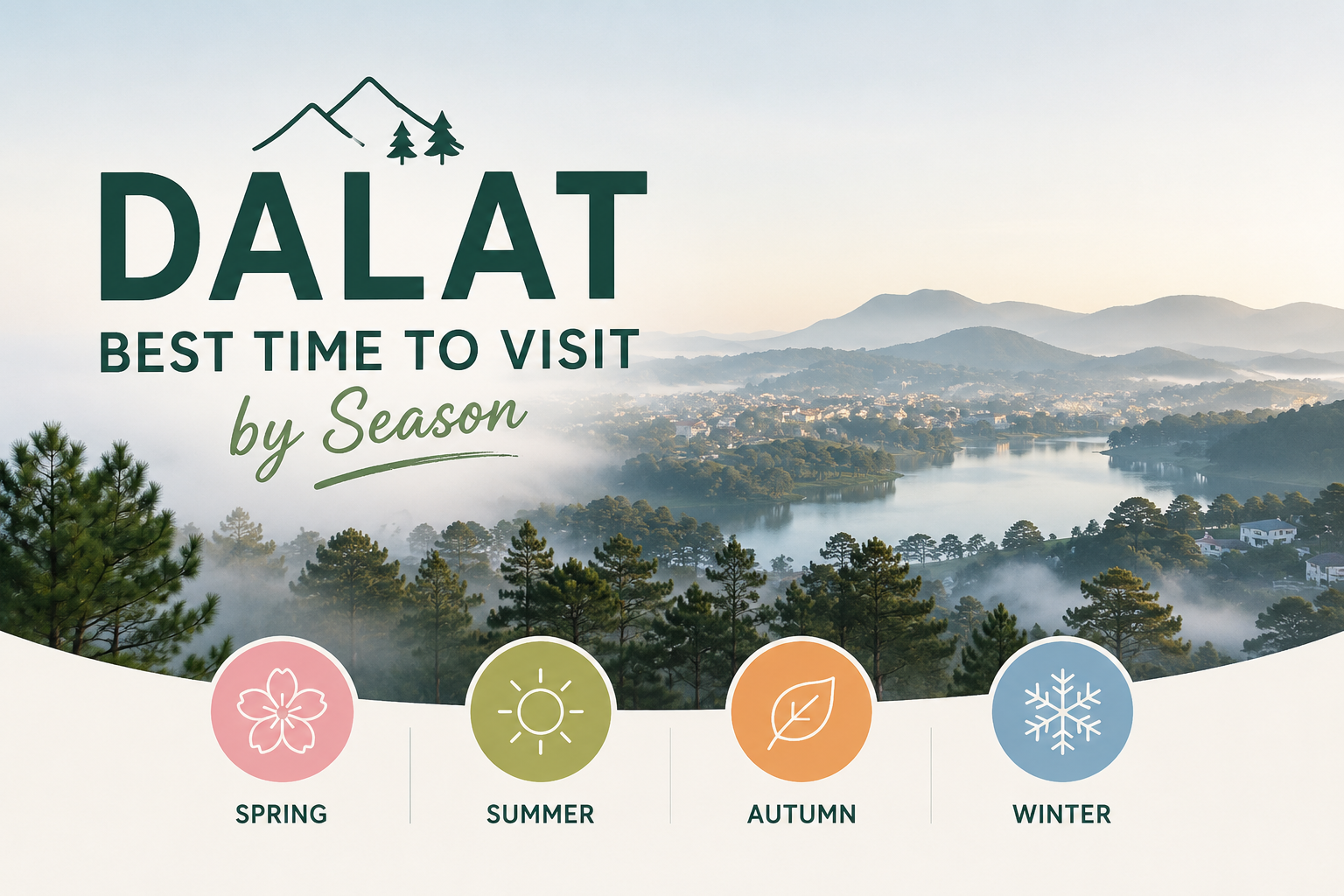
DA LAT HAS FOUR PERSONALITIES — PICK THE ONE YOU WANT TO MEET
Most travel guides will tell you Da Lat is “cool year-round” and leave it at that. That’s technically true and practically useless. The difference between Da Lat in December and Da Lat in September is like the difference between a movie set and a moody indie film. Same city, completely different experience.
At 1,500 meters, Da Lat runs 18–25°C while the rest of southern Vietnam melts. But within that range, the seasons shift the city’s mood — its light, its crowds, its colors, even the way it smells.
Here’s what each version of Da Lat actually feels like.
THE TWO SEASONS: DRY vs. RAINY
- Dry season: November – April
- Rainy season: May – October
But “rainy season” in Da Lat isn’t monsoon territory. It means afternoon showers — clouds rolling in around 14:00, a downpour that sounds like applause on tin roofs, then clearing by evening. Mornings are almost always fine. Plan accordingly.
MONTH BY MONTH — WHAT YOU’LL ACTUALLY EXPERIENCE
November – January: THE POSTCARD (Peak Season)
Temperature: 12–22°C Rain: Low Crowds: High Prices: Highest
This is Da Lat at its most photogenic. Step outside at 6 AM and the fog hangs in the pine valleys like spun cotton. The air stings your cheeks, your breath clouds in front of you, and the entire city smells like pine sap and wood smoke from the breakfast carts.
Flower gardens explode into color. December brings the Da Lat Flower Festival (every 2 years, even years — next one is December 2026), transforming the city into an elaborate display of petals, lights, and outdoor exhibitions. The flower scent is so thick near the gardens you can almost taste it.
The catch: Accommodation prices spike 30–50%. Weekend rooms vanish weeks ahead. Restaurants pack out. You’ll share Cau Dat Tea Hills with busloads of tourists instead of having it to yourself.
Best for: Flower lovers, photographers, couples who want Da Lat looking its absolute finest.
February – April: THE SWEET SPOT (Shoulder Season)
Temperature: 16–26°C Rain: Very low Crowds: Moderate Prices: Moderate
The secret season. Tet crowds have gone home, holiday pricing has deflated, and Da Lat settles back into its natural rhythm. The weather is dry and warm — warm enough for afternoon T-shirts but still cool enough at dawn to feel like a different country.
You’ll feel the sun on your shoulders as you ride through pine corridors. The air is cleaner, the views sharper — less fog, but that clarity has its own beauty. The cafes are quieter. The locals are calmer. This is Da Lat without the performance.
The catch: Late March and April can push 28°C in the afternoon. Not quite the “mist and jackets” version from the postcards.
Best for: Budget-conscious travelers, anyone allergic to crowds, outdoor activities.
May – July: THE GREEN SEASON (Early Rainy)
Temperature: 17–25°C Rain: Moderate (afternoon showers) Crowds: Low Prices: Low
The rains start, and everything transforms. The hills turn a green so intense it almost vibrates. Waterfalls go from polite trickles to full-throated roars. The air after a rain shower smells like wet pine needles and fresh earth — a scent so clean it feels medicinal.
Mornings are clear and gorgeous. By 2 PM, the clouds build, the sky darkens, and then the rain arrives — dramatic, loud, and usually over within an hour. You’ll hear it hammering the cafe’s tin roof while you sit inside with a hot coffee, watching the streets empty and refill.
The catch: Outdoor plans need flexibility. Hiking Langbiang or riding to outskirt spots requires watching the sky. Some dirt roads get muddy.
Best for: Budget travelers, waterfall chasers, people who find rain romantic rather than annoying.
August – October: THE MOODY ONE (Peak Rainy)
Temperature: 16–23°C Rain: Heavy (sometimes all day) Crowds: Lowest Prices: Lowest
Da Lat at its quietest and most atmospheric. Fog doesn’t just visit — it moves in, unpacks its bags, and stays. The city feels wrapped in cotton wool. Pine trees disappear into white mist ten meters from your face. The sound of rain on leaves becomes a constant soundtrack.
This is cafe weather. Reading weather. Slow-conversation-with-someone-you-love weather. The streets are emptier, the vendors fewer, the pace even slower than Da Lat’s already languid norm. You’ll hear the drip of water from pine branches, the splash of motorbike tires on wet roads, the occasional clatter of a restaurant closing early.
The catch: Multiple overcast days in a row. Some smaller roads to outer attractions become impractical. Photography conditions are moody but low-light.
Best for: Introverts, writers, cafe addicts, budget travelers who want luxury stays at budget prices.
SEASONAL COMPARISON
| Factor | Nov–Jan | Feb–Apr | May–Jul | Aug–Oct |
|---|---|---|---|---|
| Temperature | 12–22°C | 16–26°C | 17–25°C | 16–23°C |
| Rain | Low | Very low | Moderate | Heavy |
| Crowds | High | Moderate | Low | Lowest |
| Prices | Highest | Moderate | Low | Lowest |
| Scenery | Flowers, fog | Clear, warm | Green, waterfalls | Misty, moody |
KEY EVENTS & FESTIVALS
- Da Lat Flower Festival: Every 2 years in December (even years). Next: December 2026. Massive flower displays, light shows, outdoor exhibitions across the city.
- Tet (Lunar New Year): Late January or early February. Da Lat fills with domestic tourists. Book weeks in advance or don’t bother.
- Summer holidays (June–July): Vietnamese school break. Family tourism spikes, but it’s still manageable compared to December or Tet.
THE VERDICT
Want the dream? November–January. Fog, flowers, jackets, the classic Da Lat. Pay more, share it with more people.
Want the value? February–April. Same great weather, fewer tourists, sane prices. The smartest choice for most travelers.
Want the drama? May–July. Lush green hills, roaring waterfalls, afternoon thunderstorms that make you feel alive.
Want the solitude? August–October. Empty streets, moody fog, cheap luxury rooms. Bring a book and a rain jacket.
There’s no bad time to visit Da Lat. There’s only the version of the city you want to meet — and now you know which month serves it up.
Explore the full Da Lat destination guide here.