Quick booking links:
Most guides call it Chinatown. Locals call it Chợ Lớn — “big market” — and if you say Cholon to a taxi driver you’ll get where you’re going faster.
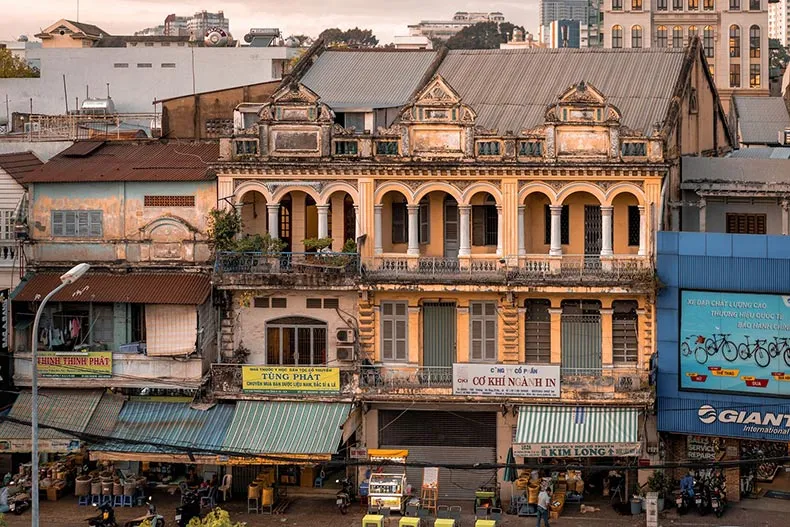
It’s the oldest Chinese quarter in Vietnam, and one of the largest in Southeast Asia. Chinese families have been living and trading here since the eighteenth century, and the neighbourhood still works as a neighbourhood: wholesale streets, herb shops, temples with people actually praying in them.
It’s also easy to do badly. Half the places worth eating at are closed by the time most visitors arrive, and a lot of the “Chinatown food tour” lists floating around mix in restaurants that are a fifteen-minute ride away from everything else.
So here’s how to plan it properly. 🏮
A LITTLE HISTORY, BRIEFLY
When the Qing dynasty overthrew the Ming in 1644, Ming loyalists and refugees left southern China by sea. The Nguyễn Lords allowed them to settle in the south, including in Gia Định — part of what is now Saigon.
They built trading communities, then built temples, and the temples were organised by home region: Cantonese, Teochew, Hokkien, Hakka, Hainanese. Each group had its own assembly hall, or hội quán, which functioned as a temple, a community centre, and a mutual-aid society at once.
That structure is why the temples here look similar but aren’t the same. Knowing which community built which one makes walking between them a lot more interesting than ticking off three sets of dragon roofs.
WHERE IT IS, AND A NOTE ON ADDRESSES 📍
Chợ Lớn spans what used to be Districts 5, 6 and 11, with the densest and most visitable part in old District 5.
In July 2025 Vietnam restructured its administrative units and abolished the district level in Ho Chi Minh City. Old District 5 is now split across wards including Chợ Lớn, An Đông and Chợ Quán. Old District 11 includes Bình Thới.
Practically: older blogs and older listings say “Quận 5” or “Phường 11.” Same streets, same buildings. Use the house number and street name and you’ll be fine. But it’s worth knowing which ward a place is in, because “in Chinatown” is doing a lot of work in some articles — a few well-known spots are two kilometres east of the temple cluster.
Getting there from District 1 takes about 20 to 30 minutes by Grab, depending on traffic.
THE TEMPLES 🏮
All three of the main ones are free to enter, all three close around 5pm, and all three are within a ten-minute walk of each other. Park once and walk. Motorbike parking runs about 10,000 VND.
Dress modestly — shoulders and knees covered. Nobody will make a scene if you don’t, but these are working places of worship.
THIÊN HẬU TEMPLE (Chùa Bà Thiên Hậu)
Built in 1760 by the Cantonese community and dedicated to Mazu, the sea goddess who protects travellers by water — which tells you exactly what the people who built it had just survived.
The signature detail is the coiled incense hanging from the beams. They burn slowly, for long prayers. Walk carefully underneath; sparks do fall.
It was recognised as a national architectural monument in 1993. It’s the busiest of the three, and the one most likely to have a tour group in it.
📍 710 Nguyễn Trãi, Chợ Lớn ward
⏰ 6:00–17:30 daily · Free
HỘI QUÁN NGHĨA AN (Chùa Ông)
Right next door, built in the late eighteenth century by Teochew families from Nghĩa An in Guangdong. It honours Guan Yu, the Three Kingdoms general who became a god of loyalty.
It’s larger than Thiên Hậu and noticeably quieter, which makes it the better of the two if you want to actually stand still somewhere. Look for the horse statue — during busy periods you’ll see worshippers crawling underneath it for blessings.
📍 678 Nguyễn Trãi, Chợ Lớn ward
⏰ 6:00–17:00 daily · Free
HỘI QUÁN ÔN LĂNG (Chùa Quan Âm)
Founded in 1740 by Hokkien families, dedicated to Guan Yin, the Goddess of Mercy.
This is the most architecturally generous of the three: interior courtyards, a garden, a small pond with fish. Street vendors outside sell offerings, so there’s more life on the doorstep than at the other two.
📍 12 Lão Tử, Chợ Lớn ward
⏰ 6:15–17:00 daily · Free
TWO QUIETER ONES
If you have more time and want somewhere with almost no visitors: Hội Quán Tam Sơn at 118 Triệu Quang Phục, built in 1839 by Hokkien families, and Hội Quán Phước An at 184 Hồng Bàng, which is later than the others but has the best wood carving in the neighbourhood.
LƯƠNG NHỮ HỌC LANTERN STREET 🏮
Worth being honest about this one, because a lot of guides aren’t.
For most of the year, Lương Nhữ Học is a normal street with some shops selling paper goods and religious supplies. Pleasant, not a destination.
For roughly a month before Mid-Autumn Festival, it transforms completely. The whole street fills with lanterns, lion dance gear, masks, and enough people that walking becomes slow. It’s genuinely one of the best street scenes in the city.
Mid-Autumn falls on the fifteenth day of the eighth lunar month, which usually lands in September or early October. If your dates are in that window, prioritise it. If they aren’t, walk through on your way between temples and don’t build an evening around it.
One practical warning from regular visitors: it gets very crowded, and pickpocketing is a real issue there during festival season. Keep your bag in front of you and don’t leave anything on a parked motorbike.
📍 Lương Nhữ Học, Chợ Lớn ward
FOOD, ORGANISED BY WHEN YOU CAN ACTUALLY EAT IT 🥢
This is the part most guides get wrong. Chợ Lớn’s best food has strict hours, and several places are shut at exactly the time visitors turn up.
EARLY MORNING (from 5:00 or 6:00)
Dimsum 108B Xóm Đất — open 6:00 to 10:00 in the morning, and that’s it. Nine to twelve kinds of dumpling and bun, huge and heavily filled, around 27,000 VND for a bowl of two pieces. It’s cheap and it’s very good.
Two things to know: it’s in Bình Thới ward, old District 11, so it’s a ride from the temple cluster rather than a walk. And if you arrive at 11am you’ll find it closed. They serve noodles in the same spot from about 4pm, which is a different meal entirely.
📍 108B Xóm Đất, Bình Thới ward ·
⏰ 6:00–10:00
Vịt quay Vĩnh Phong — roast duck, from 5 in the morning. Mostly a takeaway operation with a long queue, and locals buy the good cuts early.
A single-person portion runs about 80,000 VND. The roast pork is as good as the duck, and the pickled mustard greens on the side are worth adding. Someone usually sells bread on the street outside for around 15,000 VND, which is the correct way to eat this.
Note that it’s in An Đông ward, east of the temples.
📍 523–527 Phan Văn Trị, An Đông ward ·
⏰ 5:00–20:00
LUNCH
Cơm gà Đông Nguyên — the neighbourhood institution and the easiest recommendation on this list. Nearly five thousand reviews and still consistent.
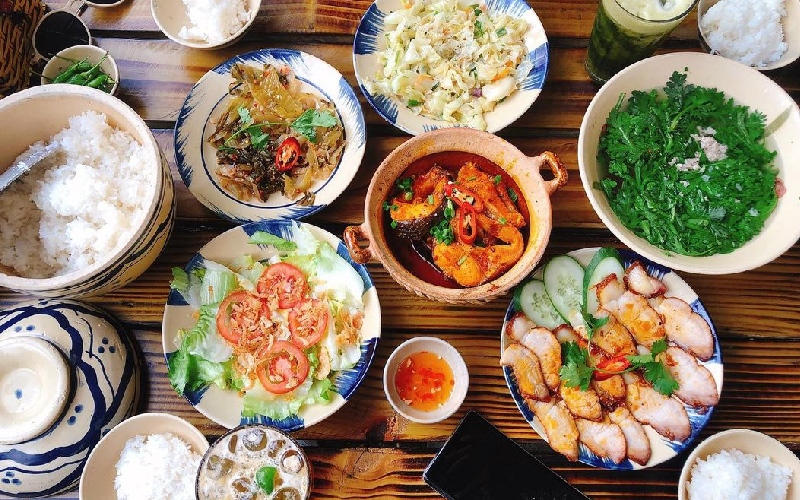
Chicken rice done several ways: soy sauce, black pepper, curry, poached. There’s a free condiment station where you mix your own sauce, which is half the fun. They also do a long list of Chinese herbal soups that are approachable even if you’ve never had one.
Order the crab-and-egg dish if there are two of you. The char siu can run dry; the roast pork is the safer side.
📍 801 Nguyễn Trãi, Chợ Lớn ward
⏰ 9:00–20:30
AFTERNOON
Chè Hà Ký — Chinese-style sweet soups, open late morning through to 22:30, and a useful stop when the temples close at five.
Honest note: reviews are mixed and we’d agree with the consensus. Order the signature items — black sesame with peanut, egg custard in tea, red bean — and skip the rest. Portions are large by regional standards; a cup here is what a small bowl would be in Singapore.
📍 138 Châu Văn Liêm, Chợ Lớn ward
⏰ 10:00–22:30
Nước mát Hồng Phong — herbal cooling drinks, about 15,000 VND a cup. Sugarcane, chrysanthemum, seaweed, corn silk. In the local framework these are restorative rather than merely refreshing, and after a morning of roast pork you’ll see the logic.
It’s a tiny takeaway window with a constant stream of motorbikes pulling up. Cash only. And it’s in Chợ Quán ward, further east than the temple cluster, so treat it as a stop on the way rather than a detour.
📍 154 Nguyễn Trãi, Chợ Quán ward · ⏰ 8:30–24:00
EVENING
Lẩu cá Dân Ích — fish and seafood hotpot, running since 1973, and one of the last places in the city still cooking it over a charcoal brazier at the table. That slow smoky heat does something to the broth that a gas burner doesn’t.
Hours are split: 6:00 to 11:00 in the morning, then closed until 4:00 in the afternoon. Turning up at 1pm is a wasted trip, and that’s precisely when a lot of visitors try.
A pot for two comes to somewhere around 400,000 VND with everything in it — fish, prawns, fish balls, liver, fried dough, greens. The satay dipping sauce is the detail people remember.
Downstairs is charcoal, no air conditioning, and hot. There’s aircon upstairs if that matters to you.
📍 99 Châu Văn Liêm, Chợ Lớn ward
⏰ 6:00–11:00 and 16:00–21:30
TIPS THAT WILL MAKE THE DAY GO BETTER 📌
Start early or come in the late afternoon. Temples open at six and close at five. Midday in Saigon is hot, and Chợ Lớn has narrow streets with little shade. The neighbourhood is much more pleasant before 10am or after 4pm.
Bring cash in small notes. Most of the food here is cash-only, and the drink and dessert stalls won’t have change for a 500,000 VND note.
Don’t try to do it all on foot. The temple cluster is walkable. The dimsum place, the roast duck and the cooling drinks are not — they’re spread across three different wards. Group them into one Grab route or pick the ones that match your timing.
Plan around the hours, not the map. If we had one day: dimsum at 7am, temples from 8:30 to 11, chicken rice for lunch, chè in the afternoon, hotpot at 5pm. That order works. Most itineraries you’ll find online don’t.
Watch your belongings around the lantern street in festival season. Crowded, and bags get opened.
Ask before photographing people praying. Most won’t mind. It’s still their temple, not a set.
If you’re building a wider Saigon plan, this pairs naturally with a morning in District 1 and a proper cơm tấm dinner
OUR HONEST TAKE AS LOCALS 🇻🇳
Chợ Lớn is not a theme park version of Chinatown. There’s no gate, no pedestrianised main drag, no signage explaining things in four languages. It’s a working commercial district that happens to be nearly three hundred years old.
That’s the appeal, and it’s also why some visitors leave underwhelmed. If you arrive at noon expecting a curated experience, you’ll find traffic, heat, and closed shutters.
Arrive at seven in the morning instead, eat dumplings, walk into a temple where the incense coils are still smoking from someone’s prayer, and it’s one of the best few hours you can spend in this city.
Also worth saying: skip the guided “Chinatown food tours” unless you specifically want the company. Everything above is straightforward to do yourself, and doing it yourself means you can be at Dân Ích at 4pm rather than wherever the schedule says. 🏮
Have you been? If there’s a place in Chợ Lớn you think belongs here — especially the small ones we’ve missed — tell us in the comments. 👇