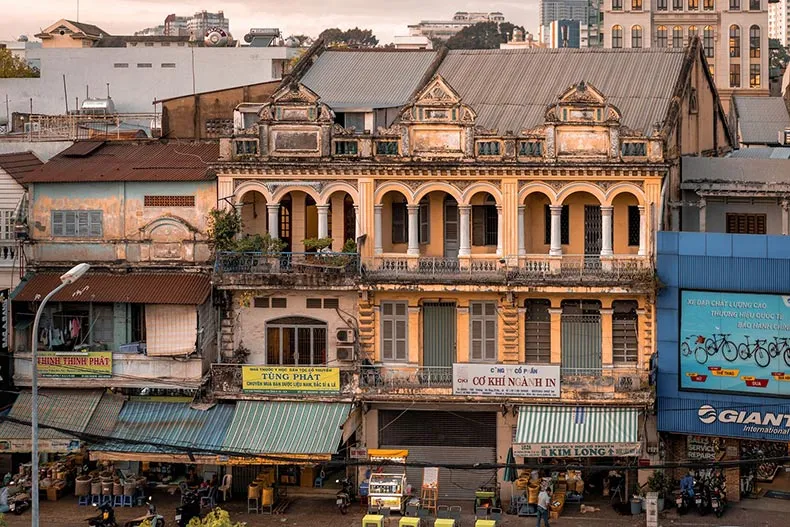
Saigon spent seventeen years building this train.
Seventeen years of detours, dust, and locals joking that they’d see the metro in their next life. Then in December 2024 the barriers came down, the first train slid out of Ben Thanh, and half the city queued up just to ride it in a circle for fun.
Two years later the novelty has worn off — which is exactly when it became useful to you.
Line 1 is now the single easiest way to cross Ho Chi Minh City without negotiating traffic, sweating through your shirt, or watching a meter climb. And unlike almost everything else in this city, the price is fixed and printed on a screen.
Here’s how to actually use it.
🚇 WHAT LINE 1 ACTUALLY CONNECTS
The full name is Ben Thanh – Suoi Tien. It runs 19.7 kilometres with 14 stations — the first three underground, the rest gliding above the traffic on elevated track.
End to end takes about 30 minutes. On the road at 5pm, the same trip is a 70-minute act of endurance.
The stations tourists actually use:
- Ben Thanh — Ben Thanh Market, the city centre, and about a 15-minute walk to the Bui Vien backpacker chaos
- Opera House — drops you at Nguyen Hue walking street, the Saigon Opera House, and the famous Cafe Apartment building
- Ba Son — the riverside redevelopment zone, quiet parks, newer restaurants
- Tan Cang — Landmark 81, the tallest building in Vietnam, plus the whole Vinhomes Central Park riverfront
- Thao Dien — the leafy expat neighbourhood. Brunch, natural wine, yoga studios, and people speaking six languages at the same bakery
- Suoi Tien Terminal — Suoi Tien theme park and the Eastern bus station, where your onward bus to Da Lat or Nha Trang probably leaves from
That last one matters more than people realise. If you’re heading to Da Lat [internal link: /en/da-lat/] or Nha Trang [internal link: /en/nha-trang/] by coach, the metro now takes you most of the way to the bus terminal for less than a dollar.
💰 WHAT IT COSTS
Fares are distance-based, and they are genuinely cheap.
Single trip, paying cash: 7,000 to 20,000 VND (roughly 0.27 to 0.77 USD)
Single trip, paying by card or QR: 6,000 to 19,000 VND (roughly 0.23 to 0.73 USD)
1-day pass: 40,000 VND (about 1.55 USD), unlimited rides
3-day pass: 90,000 VND (about 3.45 USD), unlimited rides
Monthly pass: 300,000 VND (about 11.50 USD)
Yes, going cashless shaves 1,000 VND off every ride. It’s a rounding error, but it’s also a nudge — the whole system was built assuming you’d tap something.
A few example single fares from Ben Thanh, so you can picture it:
| From Ben Thanh to | Cash fare |
|---|---|
| Opera House | 7,000 VND |
| Tan Cang (Landmark 81) | 7,000 VND |
| Thao Dien | 7,000 VND |
| Thu Duc | 14,000 VND |
| Suoi Tien Terminal | 20,000 VND |
Free travel applies to children under 6 travelling with an adult, passengers aged 60 and over, people with disabilities, and people recognised for revolutionary service. Students get the monthly pass at half price.
Here’s the maths that matters for visitors: the day pass only pays for itself if you take four or more rides in one day. Most travellers take two. Do the honest thing and just buy singles.
🎫 THE FOUR WAYS TO BUY A TICKET
There are four, and they are not equally good. Ranked from best to most annoying, for a foreign visitor:
1. TAP YOUR OWN BANK CARD AT THE GATE
This is the one. No app, no queue, no ticket to lose.
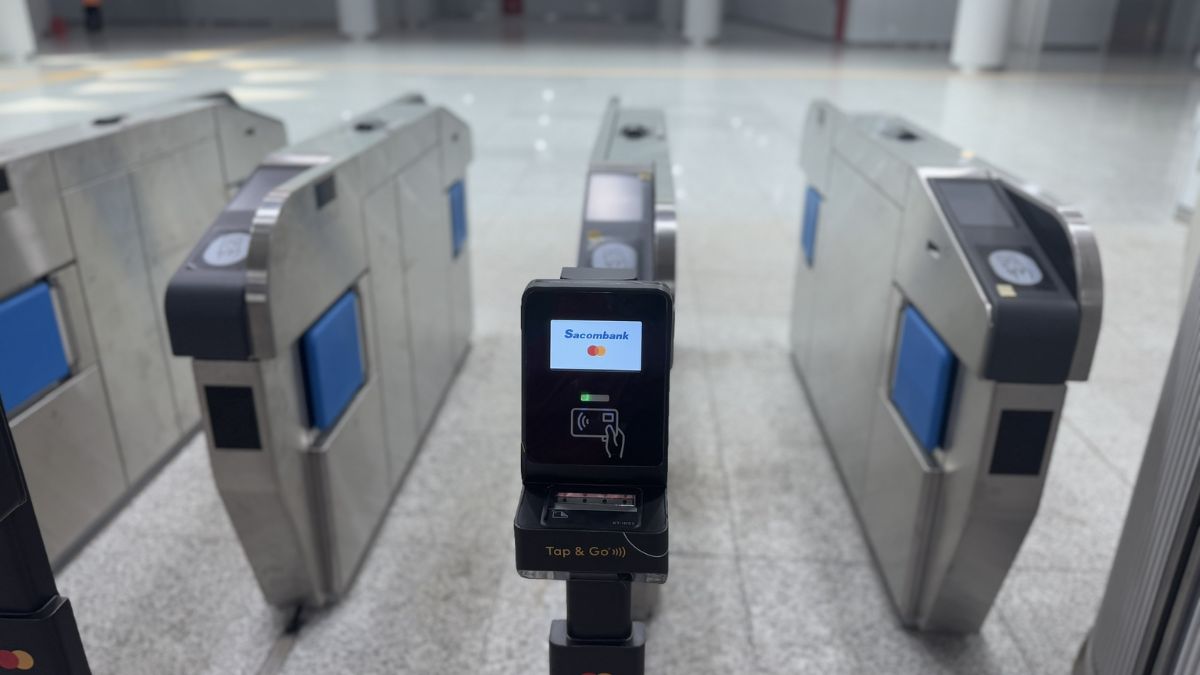
Walk up to the gate, tap any contactless card on the EMV reader, and the barrier opens. The system reads where you got on and where you got off, then charges the right fare automatically.
Accepted: Visa, Mastercard, Napas, JCB, American Express, UnionPay. Credit, debit, prepaid, and virtual cards all work. Your phone wallet works too, as long as the card behind it is contactless.
Tap the same card on the way out. Different card in, different card out, and the system will not be pleased with you.
2.THE HCMC METRO HURC APP
Free on the App Store and Google Play. Pick your origin and destination, pay, and the app generates a QR code you scan at the gate.
- Step 1: Download the HCMC Metro app from the App Store (iOS) or Google Play (Android).
- Step 2: Select your departure point, destination, and payment method.
- Step 3: Obtain a QR code from the app and scan it at the ticket gate to enter the station.
Useful if you want a day pass or monthly pass, since you can register an account and store them. Also useful if your bank card decides today is the day it blocks foreign transactions.
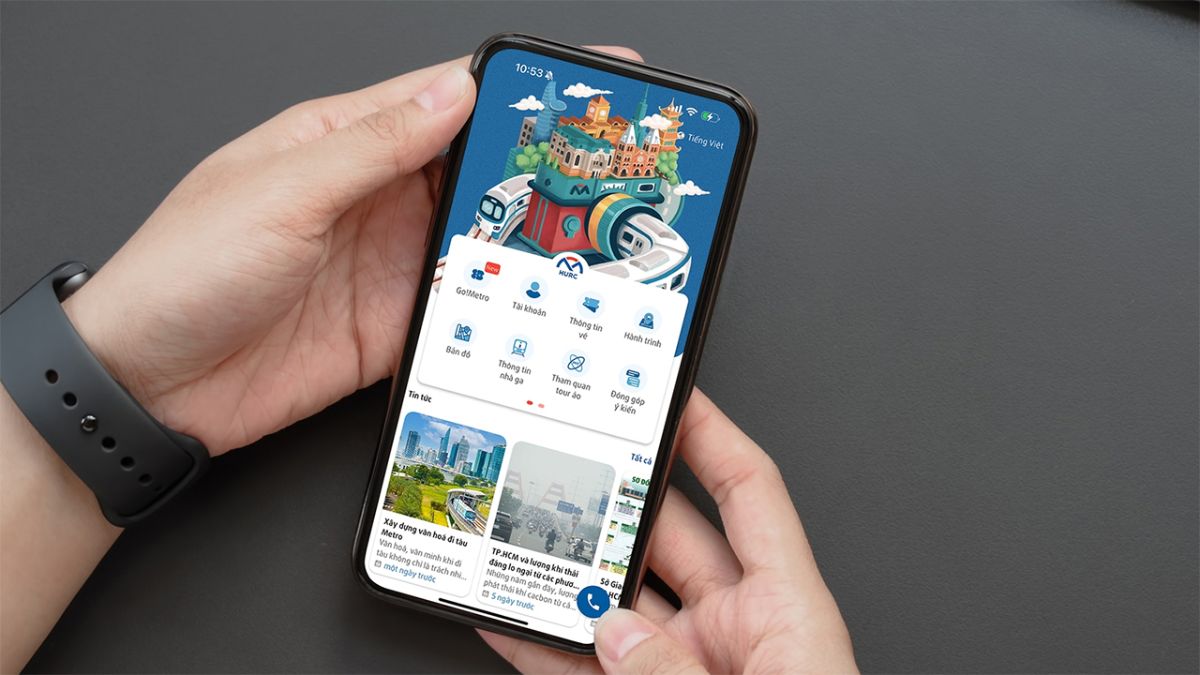
You will need mobile data for this. If you haven’t sorted a Vietnamese eSIM yet, do that before you land — trying to buy a metro ticket on hotel wifi you left twenty minutes ago is a bad plan.
3. THE TICKET MACHINES IN THE STATION
Touchscreen, English available, and they take cash, cards, and QR payment.
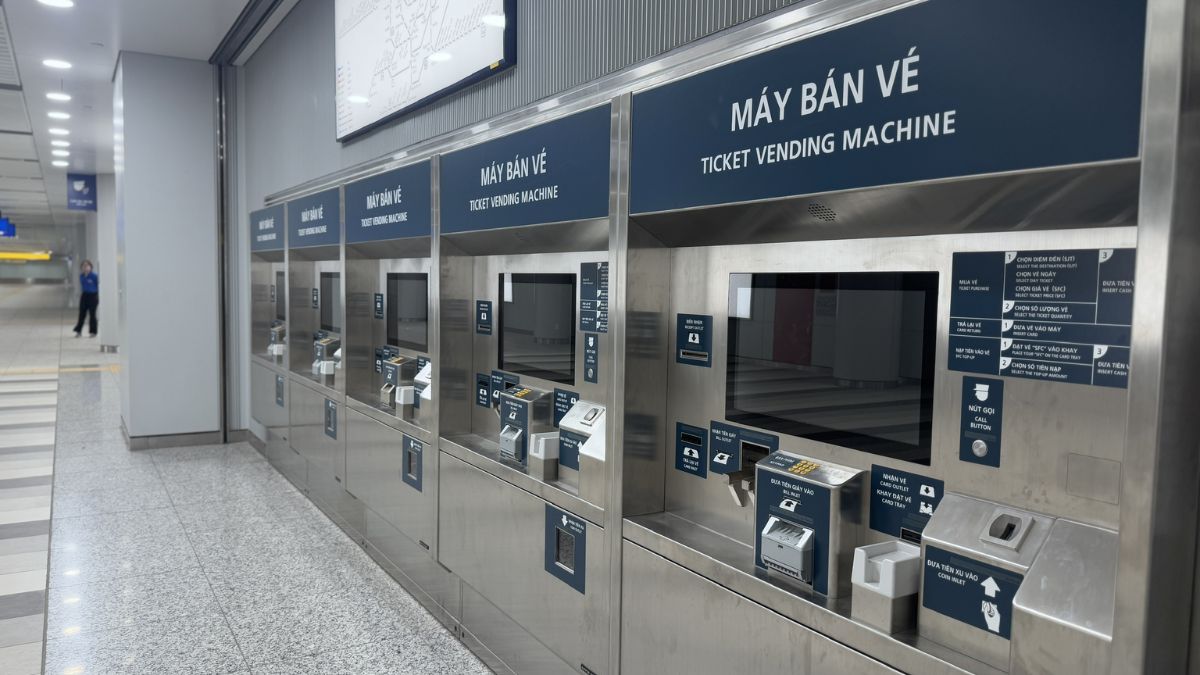
Tap the destination station on the map, choose your ticket type, pay, collect your paper ticket or QR slip. If you use cash, count your change before walking away.
This is the fallback if your card fails. It works fine. It’s just slower, and there’s usually someone in front of you having a long conversation with the screen.
4. THE STAFFED TICKET COUNTER
Still exists, still helpful, still the slowest option at 8am. But the staff are patient, several speak decent English, and if anything has gone wrong they’ll sort it out faster than the machine will.
📱 GETTING THROUGH THE GATES WITHOUT DRAMA
Tap or scan on the way in. Tap or scan on the way out. That second part is the one visitors forget.
If you have a paper ticket, hold onto it — it’s not a souvenir until you’ve exited.
If the gate refuses to open, don’t push, don’t reverse, don’t panic. Step aside and wave at the staff standing right there. Every station has them, and helping confused people through the gates is genuinely half the job.
If you ride past your intended station, you’ll be charged for the distance you actually travelled. Nobody will chase you down. You’ll just pay the correct fare.
🕐 THINGS NOBODY TELLS YOU
Trains run from 5am to 10pm, every 8 to 12 minutes. There is no late-night metro. If your plan involves leaving Bui Vien at 1am, you’re taking a Grab.
Line 1 does not go to the airport. Not now, not soon. Tan Son Nhat is on a completely different side of the city, and no amount of hoping will change that. Take a taxi or a Grab.
The air conditioning is aggressive. Coming in off a 34-degree street into a carriage that feels like a supermarket freezer is a small daily shock. Bring a light layer if you’re sensitive to it.
Weekend afternoons toward Suoi Tien are packed with families heading to the theme park. Go on a weekday morning if you want a seat and a window.
Ben Thanh station has free wifi, and the underground stations are genuinely beautiful — high ceilings, clean lines, natural light shafts. It’s worth ten minutes of looking up instead of at your phone.
Rush hour is roughly 7 to 8:30am and 5 to 7pm. It’s busy, but it’s orderly busy. Nothing like the scrum you might be bracing for.
💬 OUR HONEST TAKE AS LOCALS
Line 1 will not replace your Grab bookings. One line covering one corridor cannot move a city of nine million people, and Line 2 won’t open until around 2030.
But for one specific thing, it is unbeatable: getting between District 1 and the eastern side of the city — Thao Dien brunch, Landmark 81, the bus terminal — for the price of half a banh mi, in a fixed amount of time, with no traffic and no negotiation.
That reliability is the real luxury here. In a city where every other journey comes with a shrug and an estimate, the metro tells you exactly when you’ll arrive.
Tap your card. Sit by the window. Watch Saigon go past twelve metres below you, and understand why people here still get a little emotional about a train.
If you’re building a Ho Chi Minh City itinerary around it, we’ve mapped out the rest of the city too.
Related Ho Chi Minh City Guides
- The Ho Chi Minh City Metro Guide No One Gave You: 14 Stations, 20km, $1.50 a Day
- 3 Days in Ho Chi Minh City Itinerary: A Poetic & Practical Guide
- Where to Stay in Saigon: A Local’s Brutally Honest Guide to Choosing Your District
So — are you riding it end to end just to see the view, or only using it to skip the traffic? Tell us in the comments. 👇