If Hanoi is your first stop in Vietnam, the first feeling is usually not romance. It is heat bouncing off concrete, horns firing from every direction, and a river of motorbikes moving with the confidence of people who clearly did not read the same safety manual you did.
Then, usually around your second coffee or your first good bowl of phở, the city starts to reveal its actual personality. Beneath the noise is a rhythm: knives tapping on wooden boards, broth simmering before sunrise, old men folding newspapers by the lake, and women in floral pajamas buying herbs like this chaos has perfect logic.
That is the trick with Hanoi. If you try to conquer it like a checklist city, it will humble you fast.
If you let it unfold block by block, smell by smell, bowl by bowl, it becomes emotional in a way most “top 10 attractions” articles completely fail to explain.
1) The First-Time Shock Is Real — and So Is Hanoi’s Hidden Rhythm
Most first-timers land in Hanoi and immediately make the same mistake: they think the city is attacking them personally. The air smells like charcoal smoke, frying shallots, damp stone, and espresso; the sidewalks look like they were designed by a committee that lost interest halfway through; and every crossing feels like a tiny negotiation with destiny.
But stay still for a minute near Hoan Kiem Lake just after sunrise and the panic starts to break. The traffic hum becomes background music, the lake catches soft silver light, and the city shifts from “too much” to “weirdly hypnotic.”
You begin to notice the hidden rhythm locals trust without discussing. Morning is for broth, errands, and clear purpose; midday is for slowing down under fans and tree shade; evening is when the streets glow gold, grills smoke up, and everyone seems to migrate outdoors at the exact same time.
Hanoi rewards visitors who stop trying to win against it. This is not a city that performs on command for tourists with overbooked Google Maps pins.
It gives more to the people who walk slower, look up at peeling shutters and balconies, and realize the real attraction is not one monument. It is the feeling of the city settling into your nervous system.
What to do with that insight:
- Start your first morning with a slow walk in the Old Quarter before 8:30 AM.
- Circle Hoan Kiem Lake early or at dusk instead of midday heat.
- Build your day in blocks: one neighborhood, one meal mission, one cultural stop.
- Leave white space in your plan so Hanoi has room to surprise you.
Related read:
2) The Art of Survival: Cross the Street Like a Local, Not Like a Panicked Tourist
Let us begin with the skill every first-time visitor secretly wants but is too embarrassed to ask about: how to cross the street without looking like you are starring in your own disaster documentary. Hanoi traffic looks lawless from the curb, but it actually runs on prediction, not politeness.
The smell here is petrol, grilled pork, and hot pavement; the soundtrack is horns, scooter engines, and the occasional vendor call cutting through everything. If you freeze, dart backward, or suddenly sprint, you become the one unpredictable object in a system that only works because everyone else is making small, readable movements.
The local technique is almost insultingly simple: step out with a steady pace and keep going. Not fast, not dramatic, not with a heroic last-second leap like you are escaping an action movie no one asked for.
Drivers are reading your speed and bending around you. They are not giving you a grand romantic right-of-way; they are just very good at adjusting to people who commit.
The second survival skill is food-stall judgment. Tourists love the shiny place with ten laminated menus and suspiciously excellent air-conditioning, then wonder why their “authentic local meal” tastes like compromise.
A better sign is the low plastic stool rule. If the stools are tiny, the broth smells deep and meaty, the herbs look freshly washed, and locals are eating with total concentration instead of taking photos, you are probably in the right place.
How to cross the street in Hanoi:
- Wait for a natural gap that is small but readable.
- Step forward and keep a steady, predictable pace.
- Do not run, stop suddenly, or bounce backward.
- Keep your eyes up and your movement consistent.
- If possible, cross beside another local and mirror their speed.
How to spot a good street food stall:
- Look for low plastic stools and fast local turnover.
- Trust places with one or two dishes done repeatedly, not giant menus.
- Follow your nose: simmering broth, grilled meat, fried shallots, fresh herbs.
- Check the rhythm: active chopping, refilling, serving, and people eating quickly.
- Avoid empty stalls at peak meal time unless you enjoy culinary gambling.
Related read:
3) The Unspoken Food Rules: Especially If You Are About to Commit Crimes Against Phở
Hanoi people are generally polite. They will not always correct you when you do something strange with food.
They will, however, remember it forever in silence.
This matters most with phở. In the north, especially in Hanoi, the bowl is cleaner, more restrained, and more about broth clarity than sweet overload.
The aroma hits first: warm beef stock, charred ginger, onion, black pepper, and a little vinegar drifting upward with steam into the humid morning air. You hear spoons hitting porcelain, chopsticks tapping bowl rims, and the rapid chopping of herbs from somewhere behind the stall before you even sit down.
Southern phở often comes with a bigger herb plate, hoisin sauce, and a sweeter, more expressive profile. Hanoi phở is quieter, sharper, and less interested in performing for tourists who want to turn the bowl into a sauce chemistry experiment.
That is why locals in Hanoi often reach first for garlic vinegar or chili vinegar, not a puddle of hoisin. The point is to brighten the broth, not bury it under sweetness until it tastes like every other bad travel memory.
The same rule applies beyond phở. In Hanoi, a lot of the food logic is about balance, restraint, heat, and freshness — the snap of pickles, the smoke of grilled pork, the bitterness of herbs, the comfort of broth.
If you treat every table like a customization station, you miss the city’s entire culinary personality. Hanoi food is not under-seasoned; it is asking you to pay attention.
Unspoken Hanoi food rules:
- Taste the broth before adding anything.
- With Northern phở, use garlic vinegar or chili vinegar first if needed.
- Do not default to hoisin sauce just because that is what you did elsewhere.
- Follow local timing: phở for breakfast, bún chả for lunch, snacks and grilled things later.
- If a place is famous only because influencers keep filming there, be suspicious.
Best first-timer food block:
- Morning: phở in the Old Quarter or nearby local streets.
- Lunch: bún chả while the grills perfume the whole lane.
- Afternoon: egg coffee somewhere slightly hidden from the main rush.
- Snack detour: bánh cuốn or a simple street-side sweet if you still have room.
Related read:
4) The Hidden Escape: When the Old Quarter Starts Feeling Like Too Much
At some point, many first-time visitors hit the same emotional wall. The horns get louder, the sidewalks feel narrower, the air gets heavier, and suddenly even choosing lunch feels like an advanced decision-making exercise.
This does not mean you are bad at travel. It means you are a human being with a nervous system.
When that happens, go to Tranquil Books & Coffee near the old center. It is one of those Hanoi spaces where the outside city still exists, but the sound turns into a soft murmur instead of a personal challenge.
You step in from the street and the atmosphere changes immediately: roasted coffee in the air, pages turning, low conversations, old wood, slower light. Instead of scooter exhaust and frying oil, you get the smell of espresso, books, and a room that understands overstimulation is real.
It is not “hidden” in a dramatic secret-door sense. It is hidden in the more useful Hanoi way: ordinary from the outside, restorative on the inside, and somehow invisible to people chasing only viral check-in spots.
If you want a spiritual reset instead, the Quan Su Pagoda area can also work, especially when you need a quieter pocket and a different emotional tempo. The point is not to escape Hanoi permanently; it is to step sideways for one hour so the city becomes beautiful again instead of exhausting.
When you feel overwhelmed, do this:
- Leave the loudest Old Quarter lanes for one hour.
- Go sit at Tranquil Books & Coffee with no agenda except recovering your brain.
- Order coffee slowly and let the room reset your pace.
- If you need something more reflective, detour to Quan Su Pagoda.
- Return to sightseeing only after Hanoi feels textured again, not aggressive.
5) What First-Time Visitors Should Actually Do in Hanoi
Once you understand Hanoi’s rhythm, survival rules, food logic, and escape valves, the city becomes much easier to enjoy. You no longer need a bloated itinerary stuffed with random “must-sees” chosen by people who probably spent six hours here and called it deep research.
The best Hanoi trip for a first-timer is built from contrasts. Morning energy in the Old Quarter, a cultural stop for context, a meal that slows you down, and an evening area with more breathing room so the city ends in glow instead of exhaustion.
Visually, Hanoi is all contrast anyway: mossy walls against luxury storefronts, incense smoke against wet pavement, yellow colonial facades beside impossible tangles of black electrical wire. Sonically, it moves between relentless honking and tiny quiet moments — tea being poured, temple bells, the scrape of metal shutters opening for breakfast.
That is why the right plan is not “see everything.” It is “feel the city from multiple angles.”
Best things to do in Hanoi for first-time visitors:
- Walk the Old Quarter early in the morning.
- Spend time around Hoan Kiem Lake and nearby cathedral streets.
- Build one serious food block around phở, bún chả, and coffee.
- Visit one culture/history cluster such as the Temple of Literature.
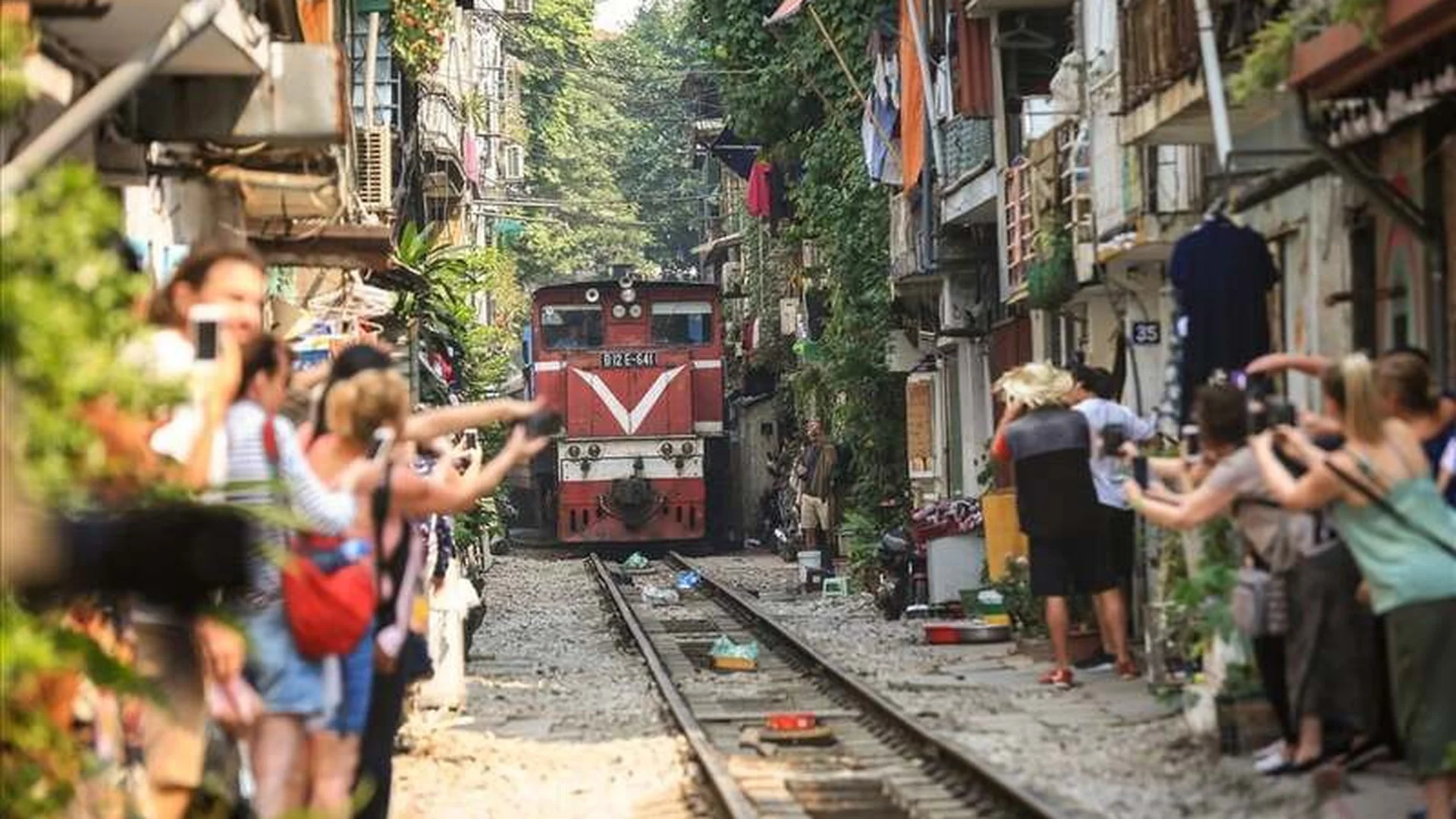
- Use Train Street only as a short curiosity stop, not the soul of your trip.
- End one day around West Lake or Truc Bach for a calmer sunset mood.
- Protect one quiet reset stop so the city never becomes too much.
Related reads:
- Where to Stay in Hanoi: 5 Areas That Actually Match Your Trip (2026)
- 7 Hidden Gems in Hanoi Locals Actually Keep Going Back To (2026)
Final Recommendation
If you remember only one thing, remember this: Hanoi is not a city you finish. It is a city you learn to hear.
Once the horns stop sounding like chaos and start sounding like rhythm, once the broth smells more inviting than intimidating, once the alley you almost skipped gives you your favorite coffee of the trip, the whole place changes shape.
And yes, you will still make a few tourist mistakes. That is fine.
Just try not to sprint into traffic or drown your Hanoi phở in hoisin like a culinary criminal, and the city will usually meet you halfway.
FAQ
Is Hanoi overwhelming for first-time visitors?
Yes, at first. But once you understand the city’s pace, crossing rhythm, and neighborhood flow, Hanoi becomes far more manageable and much more rewarding.
What should first-time visitors not miss in Hanoi?
Old Quarter mornings, Hoan Kiem Lake, one serious local food block, one cultural site, and one quieter escape when the center gets too intense.
How do locals cross the street in Hanoi?
They move at a slow, steady, predictable pace and let traffic flow around them. The key is consistency, not speed.
What is the biggest phở mistake visitors make in Hanoi?
Adding sweet sauces too quickly, especially hoisin, before tasting the broth. In Hanoi, garlic vinegar or chili vinegar is often the better move.