Hanoi Train Street is one of those places that makes the internet look both right and wrong at the same time.
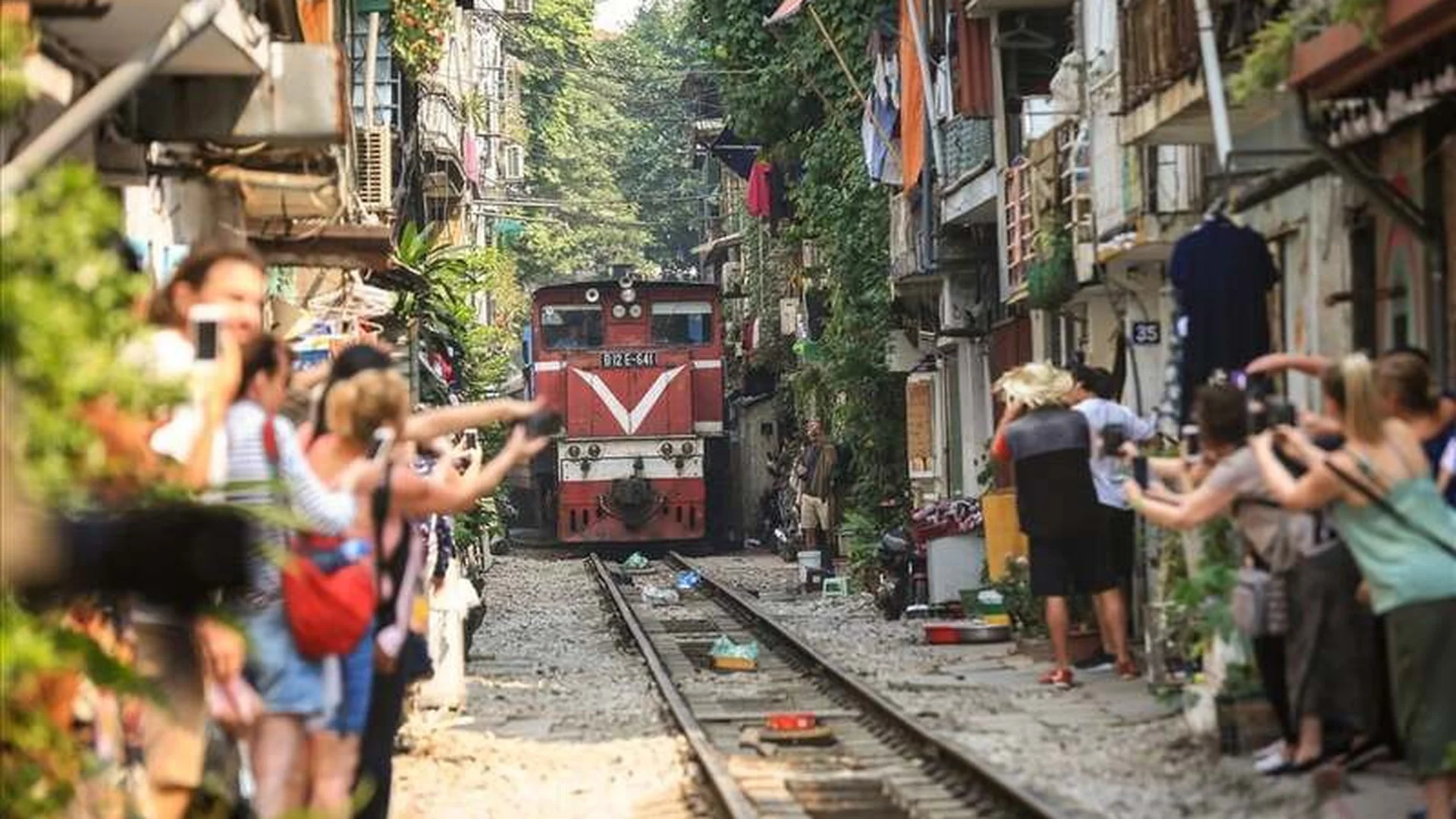
Yes, the train really does squeeze through a narrow residential corridor where balconies, laundry lines, coffee stools, potted plants, and camera phones sit almost close enough to touch the carriages.
Yes, it can feel thrilling for about thirty seconds.
And yes, if you visit like an impatient content hunter, it becomes exactly the kind of tourist circus locals complain about over dinner.
The better way is slower.
Sit down at a small cafe, order properly, ask the staff about the next train, keep your body behind the safety line, and remember that this is not a theme park. It is a working railway running through a neighborhood where people still cook lunch, dry clothes, raise children, and sweep dust from their doorsteps between train times.
Local Pro Tip: Do not walk into the tracks just because another tourist is doing it. Train Street only stays enjoyable if visitors behave like guests, not background actors in their own video.
What Hanoi Train Street Actually Is
Hanoi Train Street is not one single official attraction with a gate and ticket booth.
It is a group of railway alleys where the north-south train line passes through dense urban neighborhoods, most famously around the Trần Phú / Phùng Hưng section near the Old Quarter and the Lê Duẩn / Khâm Thiên section south of Hanoi Railway Station.
The Old Quarter side is the one most travelers mean when they say “Train Street.” It has more cafes, more balconies, more signs, and more of the tightly packed visual drama you have seen online.
The Lê Duẩn side feels less polished and more everyday. There are fewer cafe choices, but the railway corridor still gives you that strange Hanoi contrast: steel rails, family houses, motorbike repairs, laundry, bonsai pots, and the sudden authority of a passing locomotive.
Historically, this line grew out of the railway network built in the early 20th century. Hanoi expanded around the tracks instead of clearing a wide corridor, which is why the train now passes through spaces that feel impossible if you come from cities with strict railway buffers.
That tightness is exactly what makes the place famous.
It is also exactly why safety matters.
Where to Go: Old Quarter Side vs Lê Duẩn Side
If this is your first visit, start with the Old Quarter side near Trần Phú and Phùng Hưng.
Put “Hanoi Train Street” or “Train Street Cafe Hanoi” into Google Maps and you will usually be directed toward the cafe-heavy corridor around Trần Phú. This is where most cafe hosts operate, where visitors are guided to seats, and where staff normally know the latest train times for that day.
The streets are narrow, photogenic, and busy. You will see old tube houses pressing toward the rails, painted balconies, hanging vines, and tiny cafe terraces that seem to have been folded into the walls.
The Lê Duẩn / Khâm Thiên section is better if you have already seen the classic cafe stretch and want a less decorative look. Search “Ngõ 224 Lê Duẩn” and walk carefully around the area without blocking residents.
It is not as comfortable for lingering because there are fewer obvious train-view cafes. But for people who care about local texture more than Instagram symmetry, it can feel more honest.
My simple recommendation: choose the Old Quarter side for your first coffee and train view; choose Lê Duẩn only if you are comfortable exploring quietly and not expecting a cafe host to manage the experience for you.
Is Train Street Open in 2026?
The annoying but honest answer is: access can change.
Hanoi authorities have restricted Train Street several times because tourists stood too close, blocked the track, ignored warnings, or treated the railway like a photo studio. Some periods feel relaxed, some days feel tightly controlled, and sometimes police or local guards may limit casual entry.
In practice, many visitors still enter through a cafe.
A staff member may invite you in, guide you to a seat, and tell you when to move back before the train arrives. This is why buying a drink is not just “paying for a view.” You are also paying for a controlled place to sit and someone who understands the alley’s rhythm.
Do not argue if a barrier is closed.
Do not sneak around it.
Do not pressure a cafe owner to let you stand in an unsafe spot.
A good visit begins with accepting that the railway gets final say.
Train Schedule: What Time Should You Come?
Train times are the most misunderstood part of Hanoi Train Street.
Older guides often list fixed times like 3:30 PM and 7:30 PM, and those can still be useful reference points for some sections. The article we checked from VietnamVisa also notes daytime and evening train windows, including Old Quarter passes in the evening and extra weekend slots.
But in real life, schedules shift.
Railway operations, delays, seasonal adjustments, maintenance, and local access control can change what visitors actually see on a given day. The cafe staff on the track usually have the most practical information because their business depends on knowing whether guests should wait ten minutes or two hours.
Use this as a planning frame, not a guarantee:
- Weekdays: late afternoon and evening are the safest windows to ask about, especially around 3:00–4:00 PM and 7:00–10:00 PM.
- Weekends: there may be more daytime and evening train movements, but the crowd is also heavier.
- Best local-feeling visit: late afternoon before sunset, when the alley still has texture and your photos are not just neon and phone screens.
- Best crowd-control visit: weekday daytime, accepting that you may not catch a train.
Local Pro Tip: Message or call the cafe you plan to visit on the same day. Ask: “What time does the train pass today?” That answer is more useful than any blog schedule, including this one.
How Much Does It Cost in 2026?
There is usually no official entrance ticket for Train Street.
The real cost is your cafe order.
In 2026, expect basic drinks around 35,000–60,000 VND, and more “tourist-famous” drinks around 50,000–90,000 VND depending on the cafe, seat, and how close you are to the main viewing stretch.
A normal Vietnamese iced coffee may cost 35,000–50,000 VND.
Egg coffee usually lands around 45,000–70,000 VND.
Coconut coffee, smoothies, juices, or cocktails can run 55,000–100,000 VND.
Beer is often around 40,000–70,000 VND.
Simple snacks such as fries, spring rolls, or instant noodles may sit around 50,000–120,000 VND.
Is that cheap by Hanoi standards? Not really.
A local sidewalk coffee elsewhere can still be 20,000–35,000 VND. But Train Street pricing includes the seat, the safety-managed viewing position, the tourist demand, and the fact that you are sitting in a narrow railway corridor where the staff must constantly herd excited people away from danger.
Budget 100,000–180,000 VND per person if you want a drink, maybe a snack, and a relaxed wait.
Bring small cash. Many cafes accept transfers or cards now, but cash is still the smoothest way to pay in a cramped alley when everyone is trying to leave after the train passes.
Cafe Recommendations: Where to Sit
Train Street cafes change faster than formal guidebooks can keep up.
Some close, some rename, some move their entrance, and some are technically “the same place” but managed by different relatives depending on the day. Treat the names below as starting points, then use your eyes and ask politely when you arrive.
1. Cafe Đường Sắt Hà Nội — Classic Trackside Seat
Address reference: around 26/05A Trần Phú.
This is the kind of place first-time visitors imagine when they think of Train Street: chairs close to the rail, a low table, coffee sweating in the heat, and staff who know exactly when to make everyone stand back.
The best seat is not always the closest seat. Sometimes the second row gives you a better angle because you can see the train, the crowd, and the buildings squeezing around the track in one frame.
Order something simple: cà phê sữa đá, egg coffee, lime juice, or a cold beer if it is already evening.
Expected 2026 price: about 40,000–80,000 VND per drink.
Go here if you want the easy version: sit, order, wait, watch, leave without needing to negotiate the alley yourself.
2. Ca Đông Dương — Good for Railway Decor and a Softer Wait
Address reference: around 5A Trần Phú.
This cafe is often mentioned for its railway-themed interior: old train seats, vintage objects, and that slightly theatrical Hanoi habit of turning a tiny space into a memory box.
It works well if you arrive early and do not want to stand in the alley sweating while waiting for the next train. Sit inside, cool down, and let the staff tell you when the moment is near.
Expect coffee and basic drinks around 35,000–70,000 VND, with special drinks or tourist menu items higher.
The local-review note: come for the waiting experience, not only the train. If the train is delayed, you still have a decent little stop instead of an hour of frustration.
3. Banana Coffee — Balcony Angle if You Can Get It
Address reference: near the Trần Phú train street stretch, often described as opposite Trâm Cafe.
Balcony seats are the prize here.
From above, Train Street makes more sense. You see how narrow the corridor is, how staff clear the line, and how quickly the crowd changes from noisy to silent when the horn or rail vibration announces the train.
This is a better option for photography if you do not need a selfie with the locomotive behind your shoulder.
Expected 2026 price: around 45,000–90,000 VND per drink, depending on the seat and drink.
Ask before climbing upstairs, order first, and do not camp for two hours over one small bottle of water if the cafe is busy.
4. Railway Homestay & Cafe Area — Better for Local Texture
If you want a less polished stretch, walk a short distance away from the densest cafe cluster toward the homestay side lanes.
You may not get the cleanest “train coming straight at me” photo, but you will see more normal life: residents carrying groceries, cats sleeping under stools, someone rinsing cups, someone else quietly irritated that fifty strangers have discovered their front door.
This is where your manners matter most.
Do not photograph residents close-up without asking.
Do not lean on private doorways.
Do not block someone’s motorbike.
Expected prices vary, but simple drinks usually sit around 35,000–70,000 VND.
What to Order: Local Drinks That Fit the Moment
If you are only ordering for the photo, you will miss half the fun.
Train Street is still Hanoi, and Hanoi is a coffee city with opinions. The drink should slow you down enough to notice the place before the train steals all attention.
Order cà phê sữa đá if the day is hot. It is strong, sweet, and practical, the kind of drink that makes sense when the alley smells like warm metal and motorbike exhaust.
Order egg coffee if you want something more Hanoi-specific. The foam should be creamy, not watery, and it is better sipped slowly than treated like dessert soup.
Order coconut coffee if you need air-conditioning energy without actually being in air-conditioning. It is cold, sweet, tourist-friendly, and usually more expensive.
Order trà chanh or lime juice if you have already had too much caffeine. Hanoi will happily over-caffeinate you before dinner if you let it.
A fair 2026 drink range is 35,000–90,000 VND.
If a menu pushes far above that for basic coffee, you are paying for the seat, not the bean. That may be fine if the view is good, but know what you are buying.
Safety Rules Locals Wish Tourists Would Follow
The train is bigger than your photo.
That sentence should be obvious, but Train Street proves every day that it is not.
When the staff tells you to move back, move back immediately. Do not finish filming first. Do not ask for one more shot. Do not make them repeat themselves like kindergarten teachers with a locomotive behind them.
Stay behind the marked line or the cafe’s instructed safe zone.
Keep bags, tripods, selfie sticks, scarves, and children away from the rail.
Never touch the train.
Do not sit on the track for photos.
Do not put coins, phones, flowers, beer cans, or anything else on the rail.
If you are traveling with kids, hold them before the train arrives. The alley gets loud, people shift suddenly, and children can panic when the locomotive appears larger and closer than expected.
If you are drinking alcohol, keep it boring. Train Street is not the place to become the loud tourist who thinks danger is charming.
How to Take Photos Without Being That Tourist
The best Train Street photos are not the ones where you pretend you personally discovered a railway.
They are the ones that show the strange compression of Hanoi life: a coffee glass beside a rail, a balcony full of plants, a resident watching tourists watch a train, sunlight falling through electrical wires, the moment everyone becomes quiet at once.
Use a wider frame.
Step back.
Let the alley breathe.
If you want portraits, take them before the train approaches or after it passes. During the train moment, focus on staying safe and watching with your actual eyes.
Do not stand in the middle of the track until the final second. It is not brave; it is boring and selfish.
And please, do not photograph local residents like props. A woman washing cups outside her home is not “authentic background.” She is a person whose doorway became a tourist attraction without asking.
Best Time of Year to Visit
Hanoi is most comfortable from October to April, when the weather is cooler and walking between the Old Quarter, Hoàn Kiếm, and Train Street feels less like punishment.
From December to February, the air can be misty, damp, and atmospheric. Photos look moody, but evenings can feel colder than visitors expect.
March and April bring warmer light and more pleasant cafe weather.
May to August is hot, humid, and sweaty. If you visit in summer, choose late afternoon or evening, wear breathable clothes, and do not arrive already dehydrated from walking all day.
Rain changes everything. The rails get slick, the alley feels tighter, and everyone crowds under awnings. If heavy rain is forecast, skip the train chase and go eat pho instead.
A Simple Train Street Plan
Start around 4:00 PM if you want a balanced first visit.
Walk from the Old Quarter or take a Grab to the Trần Phú side. Do not arrive hungry and angry; eat something small first so you are not trapped ordering the most expensive snack on the menu just because the train is delayed.
Choose a cafe, ask about the next train, order, and settle in.
Spend the waiting time looking at the alley instead of scrolling. Notice how the staff keeps checking both ends of the track. Notice the plants, the balconies, the paint peeling from old walls, and the way residents move with the calm of people who have seen every tourist mistake before.
When the train approaches, follow instructions immediately.
After it passes, wait five minutes before leaving. Let the crowd thin out, pay calmly, and walk back toward Phùng Hưng for murals or into the Old Quarter for dinner.
If the train does not come, do not treat the visit as a failure. You still sat in one of Hanoi’s strangest urban spaces, drank coffee beside a railway, and learned that the city does not run on your content calendar.
Nearby Places to Combine With Train Street
Train Street works best as a short chapter, not a full-day plan.
Pair it with the Phùng Hưng mural street, where painted arches tell softer stories of old Hanoi. It is close, easy, and gives you a calmer walk after the intensity of the tracks.
You can also combine it with the Hanoi Old Quarter, especially Hàng Bông, Hàng Gai, and Hoàn Kiếm Lake. Start with a slow morning route using our Hanoi Old Quarter at 5 AM guide, then save Train Street for late afternoon.
If you care more about food than photos, finish with an Old Quarter bowl from our Hanoi pho guide. The train is fun, but broth is still a better measure of Hanoi.
For a broader local route, use our Hanoi destination guide and build Train Street as one stop, not the whole personality of your day.
Honest Verdict: Is Hanoi Train Street Worth It?
Yes, but only if you visit with patience and manners.
If you want a clean, controlled attraction, Train Street will feel messy. Access can be inconsistent, train times can shift, and the crowd can be ridiculous.
If you want a tiny, intense slice of Hanoi where infrastructure, domestic life, tourism, and caffeine collide in one narrow corridor, it is still memorable.
The trick is to stop trying to “beat” the crowd and start behaving like a good guest.
Buy a drink.
Listen to the cafe staff.
Keep your feet off the tracks when told.
Do not make local residents regret letting strangers into their lane.
Hanoi Train Street is not charming because a train passes close to your face. It is charming because, for a few minutes, you can see how Hanoi has always made impossible spaces work: loudly, tightly, imperfectly, and with a cup of coffee somehow balanced in the middle of it all.