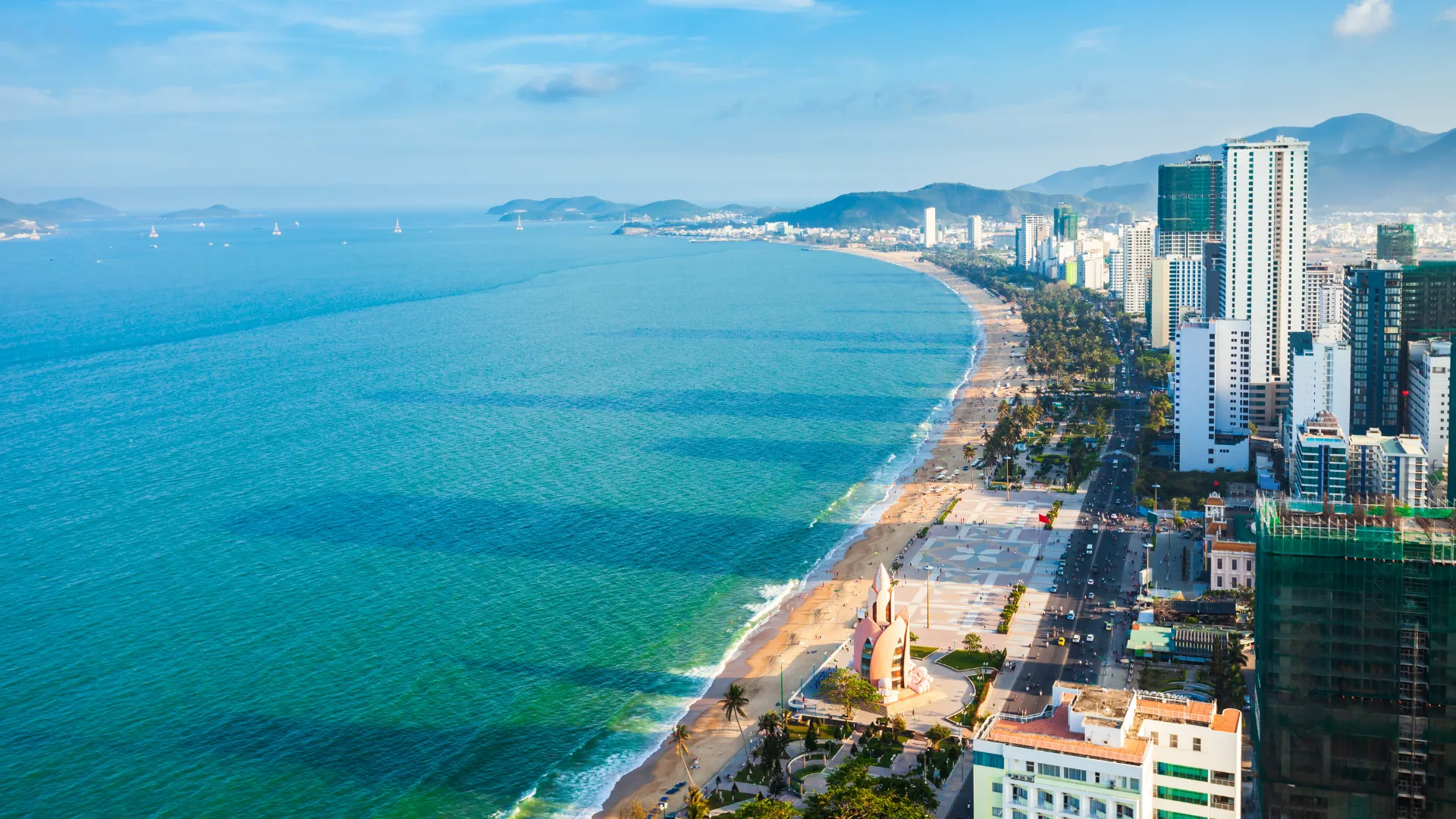
Let me be honest before you book anything: July in Nha Trang is beautiful and brutal at the same time.
The sky is impossibly blue, the sea is calm and warm, and between 11:00 AM and 3:00 PM the sun will try to cook you alive. Locals do not stroll along Trần Phú beach road at noon—we disappear indoors, nap, drink iced coffee in the shade, and return when the light turns golden.
Tourists who ignore that rhythm end up sunburnt and exhausted, convinced Nha Trang is “too hot.” It is not too hot; you are simply living on the wrong schedule.
Why July Is Secretly a Great Month ☀️
July sits in the middle of Nha Trang’s dry season. While other parts of Vietnam may be dealing with heavy humidity or monsoon rain, Nha Trang usually offers low rainfall, flatter seas, and excellent underwater visibility.
That combination makes morning island trips unusually reliable. The horizon stays sharp, boat engines hum over relatively calm water, and sunrise often arrives without a bank of grey cloud hiding it.
- 🤿 Snorkeling and diving conditions are near their peak
- 🏝️ Island boat trips are less likely to be cancelled
- 🌅 Clear sunrises are common
The trade-off is daytime heat of roughly 33–35°C and a very high UV index. The entire game is timing.
The Local Daily Rhythm—Copy This ⏰
5:30–8:00 AM: Swim While the City Is Local
This is Nha Trang’s golden window. Trần Phú beach fills with residents swimming, practising tai chi, and playing đá cầu while the sand is still comfortable under bare feet.
The water feels cooler, the light is soft, and the air smells of salt instead of hot asphalt. Join them—it costs nothing and shows you the city before the tourist schedule takes over.
Afterward, find a local stall for bún cá, Nha Trang’s signature fish noodle soup. A steaming bowl with springy fish cake costs about 50,000 VND (~US$2) and beats sleepwalking through another hotel buffet.
8:00–11:00 AM: Get on the Water
Leave early for island hopping, snorkeling, or diving. The sea is generally calmest in the morning, the boat deck has not yet become a frying pan, and you can finish the most exposed part of the trip before the fiercest heat.
Do not wait until late morning just because your hotel breakfast ends at ten. You will exchange cool blue water for a sweaty queue at the pier.
For more ideas, browse our Nha Trang destination guides.
11:00 AM–3:00 PM: Disappear
This is non-negotiable. White sunlight bounces off the pavement, the stone at outdoor sights stores heat, and even a short walk starts to feel like work.
Locals lower the shutters and move slowly. Pick one of these midday shelters instead of forcing another attraction into the itinerary:
- ☕ Café: An iced cà phê sữa đá is around 30,000 VND (~US$1.20) at a normal local café. If it costs 90,000 VND, you are paying for the décor, not coffee three times better.
- 🛁 Mud bath: Tháp Bà or I-Resort offers shaded pools and mineral water for roughly 200,000–350,000 VND (~US$8–14), depending on the package.
- 😴 Nap: Vietnam’s southern coast rests after lunch. This is climate sense, not wasted holiday time.
Local Pro Tip: Never schedule Po Nagar Cham Towers at noon. Its stone surfaces hold the heat; save the site for late afternoon.
3:00–6:00 PM: Let the City Wake Up Again
As the glare softens, scooters return to the streets and families drift back toward the sea. This is the right time for Po Nagar Cham Towers, the rocks at Hòn Chồng, or another beach session.
The stone is still warm beneath your hand, but the air begins to move again. By the final hour, Nha Trang turns gold instead of white-hot.
From 6:00 PM: Seafood O’Clock 🦐
Evening is when tanks bubble outside seafood restaurants and the grills perfume whole streets. This is your reward for not exhausting yourself at midday.
Order slowly, confirm the price by weight, and watch what locals at the next table are choosing. The loudest restaurant with the brightest lobster photographs is rarely the smartest one.
Where to Eat Without the Tourist Markup 🍜
A quick rule: if the menu leads with lobster photos and prices in US dollars, keep walking. Local seafood streets work differently—you point to what is swimming in the tank, staff weigh it, and you agree on the price per kilogram before cooking.
A street-food-style seafood meal with several grilled dishes and drinks should cost around 200,000 VND (~US$8) per person at a local spot. In the tourist quarter, the same spread can cost three times as much.
For something quick, order bánh căn: tiny rice pancakes topped with quail egg or seafood, crisp at the edge and soft in the centre. A plate from a street cart is about 25,000–30,000 VND (~US$1–1.20)—the kind of snack Nha Trang children grow up eating after school.
Local Pro Tip: Ask for the total weight and price before the seafood reaches the kitchen. A smile and “bao nhiêu một ký?” (“how much per kilo?”) prevents most surprises.
What to Pack Specifically for July 🎒
The heat is manageable when your bag is designed for it. Sea glare increases exposure, boat wind steals loose hats, and dehydration often feels like tiredness before it feels like thirst.
- SPF 50 sunscreen, reapplied after swimming
- A secure hat that will not fly off on a boat
- Electrolyte packets, or fresh coconut for 25,000–35,000 VND (~US$1–1.40) near the beach
- Light long sleeves—Vietnamese people cover up in strong sun for a reason
The Honest Verdict 💬
Should you visit Nha Trang in July? Yes—if you respect the sun. The month delivers some of the year’s best sea conditions, and the heat becomes manageable once you follow local time: early mornings, hidden middays, and golden evenings.
Fight the sun and you will lose. Move like a local and July may become your favourite beach month in Vietnam.
Planning more of the coast? Da Nang follows a similar summer rhythm. If you are heading south, check our Phu Quoc guides before assuming every Vietnamese island shares Nha Trang’s July weather.
Have you survived a Vietnamese coastal summer? Share your best heat hack in the comments. 👇