Quick booking links:
You know what makes me laugh a little every time I walk through An Thuong? Watching travelers pay 120,000 VND for a “authentic Vietnamese bowl” at a cafe with an English menu and Edison bulbs… while three streets away, the actual authentic version costs 30,000 VND and comes with a plastic stool and an auntie who will absolutely mother you into eating more.
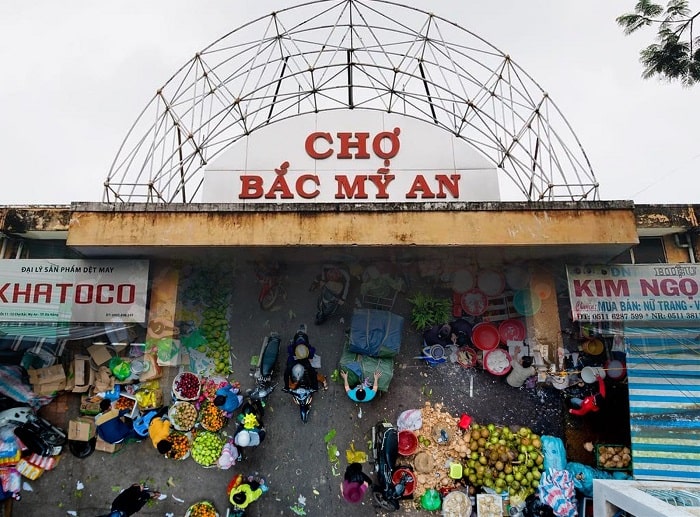
That place is Bac My An Market. And if you’re staying anywhere near My Khe Beach or the An Thuong “backpacker area,” you have zero excuse not to go. It’s a 5-minute walk. FIVE MINUTES. You can smell the grilled pork from your hotel balcony if the wind is right.
I’ve been eating at this market since my university days (it sits right next to the University of Economics, which tells you everything about the prices), and honestly? It’s still my favorite answer when friends ask me “where do locals actually eat in Da Nang?”
Let me walk you through it properly.
📍 THE BASICS FIRST
ADDRESS: 25 Nguyen Ba Lan Street, Bac My An Ward, Ngu Hanh Son District, Da Nang
HOURS: Roughly 6:00 AM – 7:00 PM for the market itself, but here’s the local secret — the food stalls really come alive AFTER 4:00 PM. That’s when the snack vendors roll out, the grills fire up, and the whole place turns into an open-air dinner party.
HOW TO GET THERE: If you’re in An Thuong, just walk. Seriously. From most hotels around An Thuong 2–4 streets, it’s 400–700 meters. From elsewhere in Da Nang, a Grab bike costs maybe 15,000–25,000 VND ($0.60–$1). There are also buses (R6A or R16, hop off around 370 Ngu Hanh Son and walk 5 minutes), but honestly, in Da Nang, Grab is your best friend.
If you rent a motorbike, park at the market gate — a few thousand dong, someone will wave you in.
🏮 WHAT KIND OF MARKET IS THIS, ACTUALLY?
Bac My An is a real neighborhood market. Not a “night market designed for tourists” — a real one, where local grandmas buy their morning fish and students hunt for 30k dinners.
The market is bigger than it looks from the gate. Inside you’ll find fresh produce, dried goods, clothes, random household stuff — the usual organized chaos of a Vietnamese cho. That part mostly serves locals, and it’s fun to wander, but let’s be honest about why you’re really here:
THE FOOD SECTION. 🍜
This is the heart of the place. Rows of tiny stalls, each one usually run by one auntie who has been making exactly one or two dishes for 15+ years. That’s the beauty of market food in Vietnam — nobody here is a “fusion chef.” They do one thing, they do it daily, and they do it better than any restaurant.
And because the regulars are students and neighborhood families, prices have stayed almost stubbornly cheap even as An Thuong next door turned into smoothie-bowl land.
🍧 WHAT TO EAT: MY HONEST HIT LIST
1. KEM BO (AVOCADO ICE CREAM) AT CO VAN’S STALL
If you eat one thing here, make it this. Kem bo is a Da Nang classic: silky blended avocado, thick and cold like a mousse, topped with a scoop of coconut ice cream. It sounds weird if you’ve never had avocado as a dessert. It is not weird. It is dangerous, because you will order a second one.
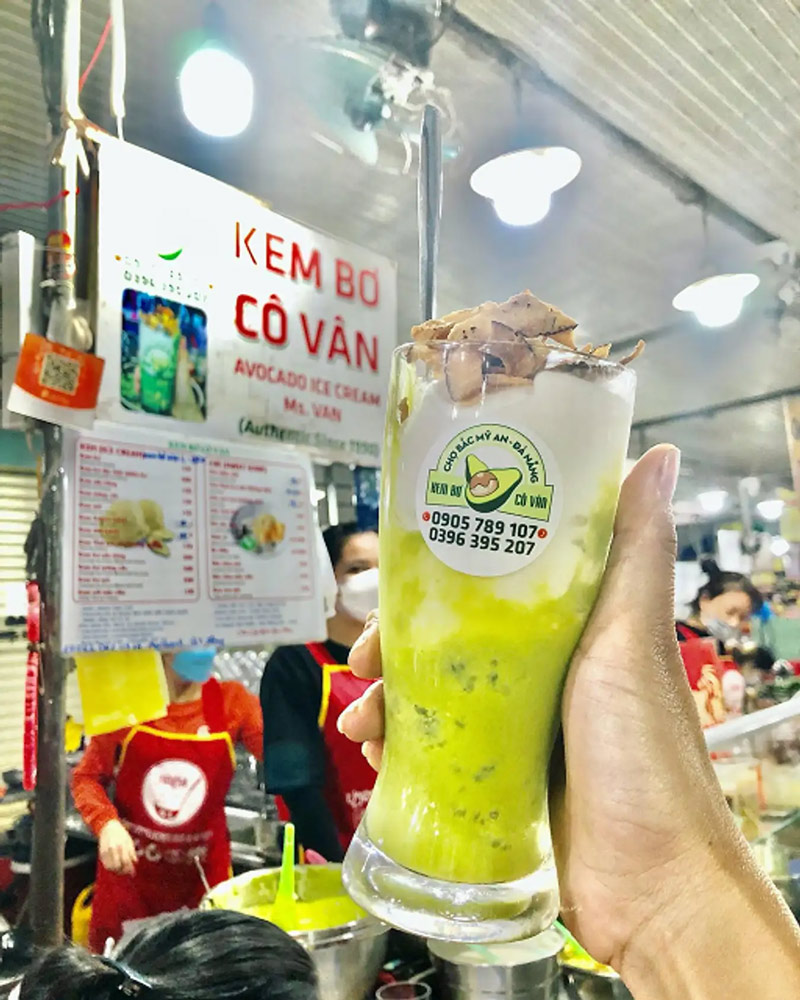
Co Van’s little stall is tucked between the other vendors — small, clean, fast, and she’s been a local legend for years. She also does versions with jackfruit, durian, and soursop, plus various che (Vietnamese sweet soups).
💰 Around 15,000–20,000 VND ($0.60–$0.80) a cup. Yes, really.
2. OC HUT (SUCKED SNAILS) — SPICY, SOUR, ADDICTIVE
Don’t run away, snail skeptics. Oc hut are small snails stir-fried in a punchy sauce of lemongrass, chili, garlic, and a touch of coconut milk. You smell them before you see them. The eating technique — you literally suck the snail out of the shell — is half the fun, and doing it badly is a great way to make the auntie laugh at you affectionately.
There’s also oc buou hap (big steamed apple snails) served with pickled carrot and papaya and a sweet-sour fish sauce dip. Order a plate, order a cold drink, sit on the tiny stools, and you’re doing Da Nang evenings the way Da Nang people do them.
💰 Expect around 30,000–50,000 VND ($1.20–$2) a plate depending on size.
3. BANH CAN — LITTLE CRISPY RICE CAKES, MADE TO ORDER
Banh can might be my favorite thing to actually watch being made. Little rice-batter cakes cooked in a clay mold pan right in front of you, filled with shrimp or pork and quail egg, crispy on the outside, soft inside, drowned (correctly) in scallion-oil fish sauce.
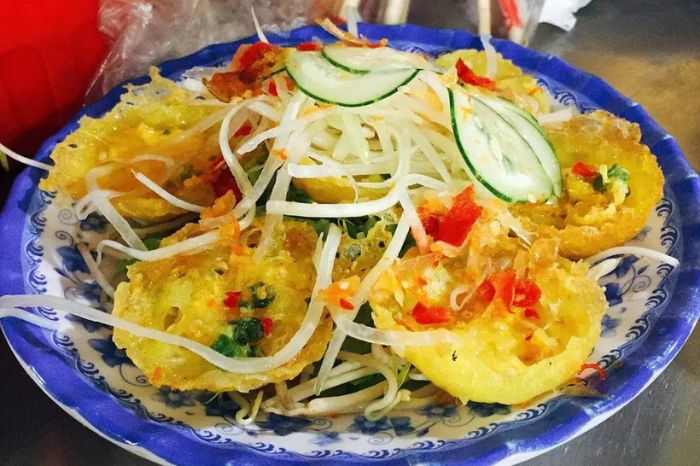
Local move: order a soy milk to drink with it. I don’t know why the combo works. It just does.
💰 Around 30,000–40,000 VND ($1.20–$1.60) for a satisfying portion.
4. BANH BOT LOC — CHEWY TAPIOCA DUMPLINGS
These translucent, chewy little dumplings filled with shrimp and pork belly are a Central Vietnam specialty (Hue claims them, Da Nang perfected the market version, don’t tell anyone from Hue I said that). Dipped in proper fish sauce with a bit of chili, they’re the ultimate “just one more” food.
Bonus: they travel well. Locals buy bags of them to bring home — a quick re-steam and they’re good as new.
💰 Around 25,000–35,000 VND ($1–$1.40) a portion.
5. BUN MAM & BUN THIT NUONG — THE REAL DINNER BOWLS
If you want an actual meal, this is it.
Bun mam nem, Da Nang style, is nothing like the southern version. Fresh rice noodles topped with sliced pork, nem chua (fermented pork), boiled young jackfruit, shredded papaya, cucumber, herbs — then hit with mam nem, a fermented anchovy sauce that is pungent, funky, and absolutely glorious. This is a dish with personality. Some travelers fall in love instantly; some need two tries. Try twice.
Bun thit nuong is the safer crowd-pleaser: smoky charcoal-grilled pork over noodles with herbs, peanuts, and sweet fish sauce. The pork here is grilled over real coals, and you can taste the difference versus any restaurant flat-top version.
💰 Around 30,000–40,000 VND ($1.20–$1.60) a bowl. A full, happy dinner for under $2.
6. BANH DAP — THE DISH YOU’VE NEVER HEARD OF
This one’s for the food-curious. Banh dap = a fresh, soft rice paper layered onto a crispy grilled rice cracker, then SMASHED together (dap literally means “smash”) and dipped in mam nem. The texture contrast — soft and shattering-crisp in one bite — is the whole point. Add grilled pork or pork intestine if you’re feeling brave.
You’ll find banh dap all over Central Vietnam, but eating it on a market stool for pocket change beats any restaurant setting.
💰 Around 20,000–30,000 VND ($0.80–$1.20).
7. THE GATE-SIDE SNACK RUN 🥤
Right at the market entrance you’ll find the snack stalls: banh trang tron (rice paper salad — Vietnam’s favorite messy snack), banh cam (fried sesame balls), banh tieu (hollow fried doughnuts), fresh coconuts, and kumquat juice. Perfect for grazing on your way in or out.
💰 Most snacks: 10,000–25,000 VND ($0.40–$1).
⏰ WHEN TO GO (THIS MATTERS)
Morning (6–9 AM): the fresh market at full throttle. Great for photos, people-watching, and seeing how a Vietnamese neighborhood actually feeds itself. Fewer prepared-food options though.
Midday: quiet-ish. Skippable.
AFTER 4 PM: golden hour. 🌅 This is when the full food lineup appears, the heat softens, and the atmosphere turns social. My ideal plan: beach until 4:30, walk over sandy-footed, eat three different things, roll home by 7.
Note the market winds down around 7 PM — this is NOT a late-night spot. For late eats, head back into An Thuong.
💡 HONEST TIPS FROM SOMEONE WHO EATS HERE
- ASK PRICES FIRST if there’s no menu. Most vendors here are wonderfully honest — this is a locals’ market, not a tourist trap — but confirming “bao nhieu?” (how much?) before ordering is just good market manners anywhere in Vietnam. Nobody will be offended.
- BRING TISSUES AND HAND SANITIZER. Some stalls have napkins, many don’t. A small pack of wet wipes makes you unstoppable.
- MANAGE YOUR EXPECTATIONS ON COMFORT. Tiny stools, maybe a fan, maybe not. This is the trade you make for food this good at these prices. Personally, I think plastic-stool dining makes everything taste 20% better.
- SENSITIVE STOMACH? Ease in. Go for the cooked-to-order hot dishes first (banh can, grilled pork) before diving into raw herbs and shellfish. Carry your usual travel meds. Most people are totally fine — market turnover here is fast, which means fresh ingredients.
- CASH ONLY, SMALL BILLS. Bring a stack of 10k, 20k, 50k notes. A 500k note at a 15k ice cream stall creates a small diplomatic incident.
- LEARN ONE PHRASE: “Ngon qua!” (So delicious!) — say it to the auntie after eating and watch her entire face light up. Instant VIP status on your next visit.
⚖️ BAC MY AN VS HAN MARKET VS CON MARKET: WHICH ONE IS FOR YOU?
Every Da Nang guide will send you to Han Market. Half of them mention Con Market. Almost none mention Bac My An. So let me settle this like a local who has spent money at all three.
🛍️ HAN MARKET — THE SOUVENIR STOP
WHERE: Right in the city center, by the Han River, walking distance from Dragon Bridge and the Cathedral.
WHAT IT’S FOR: Gifts and souvenirs. This is the most tourist-ready of the three — cleaner, more organized, plenty of English spoken, prices on many items. Downstairs is dried specialties (beef jerky, fish sauce, candied fruits, packaged nicely for suitcases) and food stalls; upstairs is fabric, ao dai tailoring, clothes, and handicrafts. If you want a custom ao dai made in a day or two, the fabric stalls here are a classic choice.
THE CATCH: Because it’s tourist-ready, prices start higher and bargaining is expected. Offer around 50–70% of the first price with a smile and you’ll land somewhere fair. Food here is decent — meals run roughly 20,000–50,000 VND ($0.80–$2) — but it’s not why you come.
VERDICT: Come here to SHOP, not to eat.
🍜 CON MARKET — THE FOOD LABYRINTH
WHERE: City center, 290 Hung Vuong Street, about 10 minutes from Han Market.
WHAT IT’S FOR: Eating like you mean it. Con Market is the biggest and oldest of the three — over 2,000 stalls — and its food court is legendary among locals. Two rows of stalls: one entire side of sweets (che, smoothies, pickled fruits), one side of savory everything — mi quang, bun mam, bun cha ca, banh beo, banh xeo, banh can, oc hut, and on and on. Prices are posted on the wall at most stalls, mostly 15,000–30,000 VND ($0.60–$1.20) per dish, which makes it wonderfully stress-free.
LOCAL TIMING TIP: The indoor food court runs from morning to mid-afternoon; the street food scene OUTSIDE the market fires up after 3 PM. Different vibe, both great.
THE CATCH: It’s crowded, hot, chaotic, and there’s no air conditioning. That’s also exactly its charm. The clothes and “brand name” goods sections are cheap but very much fake-designer territory — fun to browse, bargain hard.
VERDICT: The best pure FOOD market in central Da Nang. Come hungry, bring patience.
🏖️ BAC MY AN — THE NEIGHBORHOOD SECRET
WHERE: Beach side of the river, 5 minutes from An Thuong and My Khe Beach.
WHAT IT’S FOR: Everything this article is about — real neighborhood eating at student prices, zero tourist markup, zero performance. It’s smaller than Con Market and has none of Han Market’s souvenir polish. What it has instead is location (you can walk from your beach hotel) and authenticity (the customer base is still 90% locals).
VERDICT: The best market-to-effort ratio in Da Nang if you’re staying beachside. And the evening snack scene after 4 PM is, for my money, the most charming of the three.
🗺️ MY HONEST ROUTING ADVICE
Staying near the beach with limited time? Bac My An only. You lose nothing.
Doing a full city day? Morning at Han Market for souvenirs and ao dai fabric, lunch at Con Market’s food court, then back across the river for an evening snack round at Bac My An. Three markets, one very full stomach, all for under 300,000 VND ($12) including the Grab rides.
Hate crowds? Bac My An on a weekday, right at 4 PM. Thank me later.
🎯 THE BOTTOM LINE
Bac My An Market is what happens when a genuinely local market ends up five minutes from a tourist neighborhood — and somehow stays genuinely local. It’s cheap, it’s loud, it’s delicious, and it will show you more real Da Nang food culture in one evening than a week of restaurant dinners.
Total damage for a full evening of eating everything on this list? Maybe 150,000–200,000 VND ($6–$8). Per person. Including dessert. Twice.
If you’re planning your Da Nang food days, pair this with a morning at the beach and an evening at the Dragon Bridge — check out our full Da Nang guide at vietnamreviews.blog/en/da-nang for how to string it all together. And if you’re continuing south, our Hoi An guides at vietnamreviews.blog/en/hoi-an cover where the market-food adventure continues (spoiler: Hoi An’s central market deserves its own hungry afternoon).
Come with an empty stomach. Leave with a full heart. That’s the Bac My An deal. 🦆🍜
Prices reflect 2026 market rates and may vary slightly by stall and season. USD conversions approximate.