Quick booking links:
Every September, I watch the same tragedy unfold from my stool at the market.
Travelers arrive in Sapa with golden rice terraces in their heads, get herded onto a tour bus, spend two hours at a concrete platform with a heart-shaped photo frame, and leave believing they’ve “seen the terraces.”
They saw a parking lot with a view. The real thing was twenty minutes away, and nobody told them.
So let me tell you. This is my honest map of where the gold actually is — and the two famous spots I’d happily let sink into the valley fog.
🌾 FIRST, THE ONLY THING THAT ACTUALLY MATTERS: WHEN
Here’s the brutal truth that no tour brochure will print: Sapa’s rice terraces are only golden for about five weeks a year.
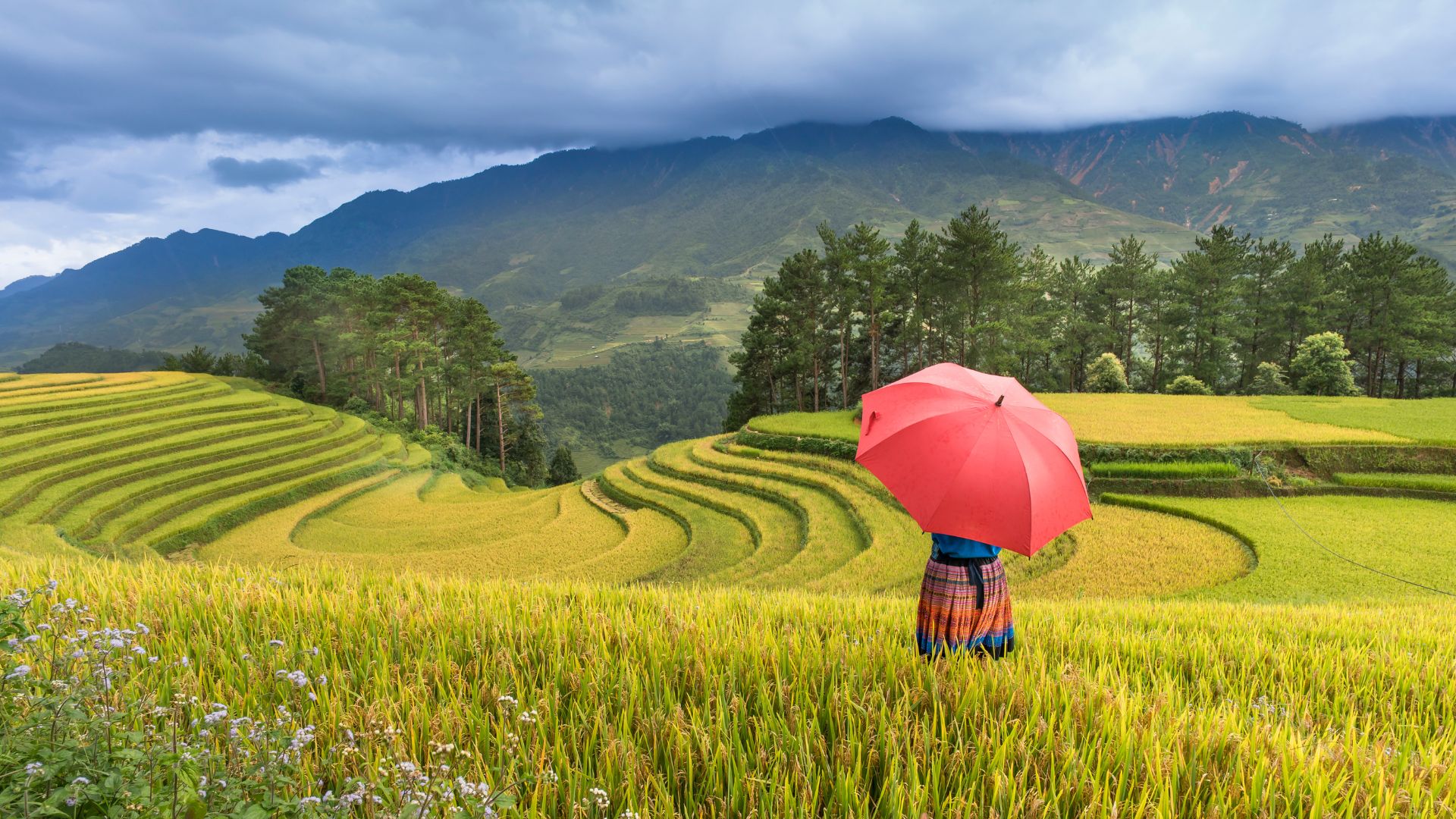
The window: mid-August to mid-to-late September. That’s it. That’s the whole show.
The rice ripens from the lower valleys upward, so each area peaks at a slightly different week. Late August is usually safest for the classic valley views; by early October the harvest is done and you’re photographing stubble.
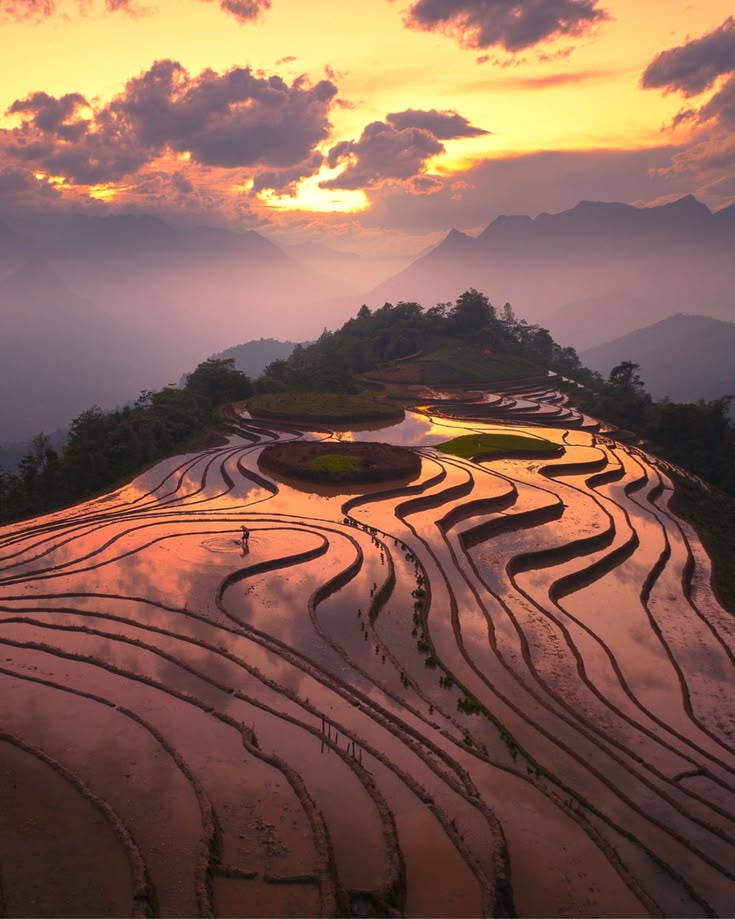
Come in spring and the terraces are mirrors — flooded, silver, beautiful in a different way. Come in June-July and they’re electric green. But the gold? Five weeks. Plan around it or don’t come for the rice.
One more thing: this is also cloud-and-drizzle season. Mornings can start inside a cloud, burn clear by 9 AM, and dump rain by 3 PM. Every recommendation below assumes you’re a morning person now. Congratulations.
📍 THE 6 VIEWPOINTS WORTH YOUR LEGS
- MUONG HOA VALLEY — THE CLASSIC, DONE CORRECTLY
This is the postcard. A vast staircase of gold dropping a thousand meters into the valley, with the Muong Hoa stream glittering at the bottom.
Most people see it through a bus window on the main road. Don’t. Take the small road that drops down toward Lao Chai instead of staying on the ridge, and walk a section of it on foot.
You’ll smell woodsmoke and drying rice straw. You’ll hear the water moving through the terrace channels — a sound like the whole mountain quietly breathing. That sound doesn’t reach the road.
Cost: free if you walk in, or a small trekking-route fee (~75,000 VND / $3) at some village checkpoints. Worth every dong.
- LAO CHAI – TA VAN — THE HALF-DAY TREK THAT RUINS OTHER TREKS
This is the walk I take visiting friends on, and I’ve never once had someone shut up about it afterward.
Start from the edge of Sapa town around 7 AM, when the fog is still lifting off the valley in slow ribbons. By the time you reach Lao Chai, the sun has switched the terraces on like someone turned a dimmer to full gold.
The trail winds between the rice itself — not above it, through it. You’ll feel the humidity of the paddies on your skin, smell the green-sweet ripening grain, and hear roosters, water buffalo bells, and kids yelling “hello!” from doorways.
Finish in Ta Van village with lunch at a family homestay: grilled pork skewers, mountain rice, stir-fried chayote greens, maybe a shot of corn wine you didn’t ask for. Around 100,000–150,000 VND ($4–6) for the meal, and you’ll remember it for years.
Do this with a local H’Mong guide (more on that below). The trail braids into a dozen paths and the guides know which terraces peaked this exact week.
- Y TY & NGAI THAU — THE ONE LOCALS GATEKEEP
I’m going to regret publishing this.
Y Ty is a Ha Nhi village near the Chinese border, about 2.5–3 hours’ drive from Sapa, and it has the most cinematic terraces in the entire north — great amphitheaters of gold stacked under a sky that produces cloud seas on autumn mornings.
There are no tour buses. There are barely restaurants. There’s the smell of rain on dirt roads, the clang of a blacksmith somewhere, and terraces so vast they make Muong Hoa look like a garden.
Go for a sunrise, stay one night in a local homestay (150,000–300,000 VND / $6–12 a bed), and eat whatever the family cooks. This is the trip within the trip.
If you only have two days in Sapa, skip this. If you have three or more, this is the third day. No contest.
- TA PHIN VALLEY — TERRACES PLUS ACTUAL LIFE
Ta Phin, 30 minutes from town, is a Red Dao village where the terraces come with a living village attached — not a performance of one.
Women in embroidered red headscarves actually harvesting rice, indigo dye drying on fences, the sharp herbal smell of Dao medicinal baths steaming from wooden tubs.
The move: walk the valley loop in the late afternoon, then finish with a Red Dao herbal bath (~150,000–250,000 VND / $6–10). Sitting in a hot wooden barrel full of mountain herbs while your legs forgive you for the day’s walking — this is the most underrated hour in Sapa.
- SAU CHUA — THE SUNRISE NOBODY SETS AN ALARM FOR
On the other side of the mountain from the famous valleys, Sau Chua faces east. Which means at 5:45 AM in September, you get sunrise light pouring across golden terraces with Fansipan’s silhouette behind you.
It’s a 25-minute motorbike ride from town on a road with more potholes than pavement. You’ll pass through cold pockets of fog that smell like pine and wet grass, and arrive shivering slightly.
Then the sun clears the ridge and the whole valley ignites, and you’ll forget you were ever cold.
Total cost: motorbike rental (~150,000 VND / $6 a day) and one very early alarm. There is no ticket booth. That’s the point.
- O QUY HO PASS — FOR THE SCALE OF IT ALL
The terraces are the close-up. O Quy Ho is the wide shot.
This is one of Vietnam’s highest mountain passes, and from its viewpoints you understand what the Hoang Lien range actually is — wave after wave of blue mountains with valleys of gold stitched into their sides.
Go at 4:30–5 PM when the light goes long and warm. Buy grilled eggs and bamboo-tube rice from the ladies at the top (10,000–20,000 VND a piece), eat them sitting on a rock in the wind, and watch the clouds pour over the pass like slow water.
The main viewpoints are free. Some newer “cloud hunting” platforms charge 80,000–100,000 VND to stand on a glass skywalk. The rock is better. The rock is always better.
❌ AND THE 2 THAT AREN’T WORTH IT
I’ll take the heat for this section, but you didn’t come here for diplomacy.
CAT CAT VILLAGE — A THEME PARK WEARING A VILLAGE COSTUME
Cat Cat was a real H’Mong village once. Now it’s a 150,000 VND ($6) entrance fee for a paved walkway lined with souvenir stalls, costume-rental shops, and photo props, moving at the speed of the slowest selfie stick.
Yes, the waterfall is pretty. No, it is not worth elbowing through a corridor of rented “ethnic outfits” to see it. Everything Cat Cat sells as a performance, Ta Van and Ta Phin give you for real — for free, with terraces attached.
THE CHECK-IN PLATFORMS ON THE RIDGE ROAD — VIEWS WITH A COVER CHARGE
You’ll see them on the way into the valley: heart frames, giant hands, “infinity gates,” swing sets bolted to the hillside. Entrance 50,000–100,000 VND, queue included.
Here’s the thing that makes me laugh and cry at once: they charge you to photograph the exact same valley that is free fifty meters down the road. The props don’t improve the view. They put a queue in front of it.
If your dream photo involves a giant plastic hand, go with my blessing. If it involves rice terraces, keep driving.
🚶 THE GUIDE QUESTION (SHORT ANSWER: YES, AND HIRE HER DIRECTLY)
For the valley treks, hire a local H’Mong or Red Dao guide. Fair 2026 rate: 600,000–900,000 VND ($25–35) for a full-day trek, often including a home-cooked lunch.
Book through your homestay or directly with guides in town — the money goes to her family, not a Hanoi tour desk selling the same walk at triple the price with a bus attached.
Beyond the ethics, it’s just a better day. The trails through the terraces fork constantly, the peak-gold section moves week by week, and the guides carry all of that in their heads. You’re not paying for directions. You’re paying for timing.
🚗 GETTING THERE, 2026 PRICES
From Hanoi: limousine van, about 6 hours, 350,000–450,000 VND ($14–18) each way. Or the overnight sleeper train to Lao Cai plus a one-hour shuttle up the mountain — around 600,000–900,000 VND ($24–36) for a soft sleeper, and honestly the more atmospheric way to arrive.
In Sapa: rent a motorbike (~150,000 VND / $6 a day) if you’re comfortable on mountain roads, or negotiate a xe om / taxi for the day for the further viewpoints.
🎫 SHOULD YOU ADD FANSIPAN?
Honest answer: in golden season, the terraces are the headliner and Fansipan is the encore — but it’s a very good encore.
The cable car up to Indochina’s highest peak (3,143 m) crosses directly over the Muong Hoa valley. In September, that means you float above the gold you just walked through, which is a genuinely surreal way to say goodbye to it.
Pick a clear morning — the summit is pointless inside a cloud — and check the sky before you commit. You can book Sun World Fansipan Legend tickets at direct-from-source prices through our tickets page, same price as the counter without the queue.
📸 PHOTO TIMING CHEAT SHEET
Golden hour, golden rice: 6–9 AM for east-facing valleys (Sau Chua, upper Muong Hoa), 4–6 PM for O Quy Ho and west-facing slopes.
Midday light flattens the terraces into a yellow pancake. Use those hours for lunch, herbal baths, and the drive to the next valley.
September rule: shoot in the morning, always. The afternoon rain isn’t a risk, it’s a schedule.
💸 THE NUMBERS, ALL IN ONE PLACE
- Trekking route fees: ~75,000 VND (~$3) at some checkpoints
- Local guide, full day: 600,000–900,000 VND (~$25–35)
- Homestay bed, Ta Van / Y Ty: 150,000–300,000 VND (~$6–12)
- Home-cooked lunch: 100,000–150,000 VND (~$4–6)
- Red Dao herbal bath: 150,000–250,000 VND (~$6–10)
- Motorbike rental: ~150,000 VND (~$6) per day
- Limousine from Hanoi: 350,000–450,000 VND (~$14–18) each way
- Cat Cat entrance (not recommended): 150,000 VND (~$6)
- Check-in platforms (really not recommended): 50,000–100,000 VND (~$2–4)
🌙 LAST WORD FROM THE MOUNTAIN
The golden season is short, the mornings are cold, and the best viewpoints ask something of your legs. That’s not a flaw. That’s the filter.
The travelers who see Sapa at its best are the ones willing to wake up in the dark, walk into the fog, and trust that the mountain will pull the curtain back by nine.
It always does. See you on the trail — I’ll be the one telling the water buffalo to get out of your photo.